
.2601141657372.jpg)
Prediction Markets and Event Contracts: CFTC Innovation Advisory Committee, Insider Trading Risk, and Market Integrity
On January 12, 2026, Michael S. Selig, the new Chairman of the U.S. Commodity Futures Trading Commission (CFTC) put prediction markets in the spotlight by launching a new Innovation Advisory Committee. Chairman Selig intends to nominate the committee’s charter members. Among the roster of charter members are leaders from market infrastructure firms and high-profile prediction market and crypto platforms, including Polymarket, Kalshi, Crypto.com, Gemini, Kraken, and Bullish.
The committee announcement comes as scrutiny of event contracts and prediction markets has intensified, in part due to their rapid adoption into traditional finance.
Event contracts are derivatives that settle based on whether a specific real world event happens by a certain date, often in a simple and binary, yes or no format that pays out if the event occurs and does not pay out if it does not. Prediction markets are the marketplaces where traders buy and sell those contracts, with the trading price often treated as a rough proxy for the market’s view of the likelihood of the outcome.
In a January 11, 2026 letter to Chairman Selig, a group of U.S. senators led by Senator Catherine Cortez Masto urged the CFTC to address risks of insider trading, manipulation, and fraud in event based derivatives, and warned that contracts tied to military or similarly sensitive operations could raise national security concerns. The letter points to the CFTC’s event contract framework, including the rule addressing contracts involving gaming, war, terrorism, assassination, or unlawful activity, and it invokes the CFTC’s statutory anti-manipulation mandate.
This post addresses two connected questions. First, how event contracts and prediction markets are different from how the futures markets have historically operated and why this matters. Second, why the conversation keeps returning to conflicts of interest and to the older debate about when trading starts to look like gambling.
One consequential aspect of this moment in the derivatives markets is that retail traders are to participate in event contracts without going through a regulated intermediary. That means retail traders can interact directly with market infrastructure functions, including clearing and related protections, that historically sat behind professional intermediaries.
This shift raises two core questions for U.S. derivatives regulation. The first is how to manage conflicts of interest when trading, clearing, and brokerage functions are affiliated. The second is how to preserve the traditional economic role of the futures markets, including their public interest purposes like hedging and price discovery.
The Traditional Clearing Model and Why It Exists
Futures markets serve several functions. They support price discovery. They also support hedging and risk mitigation for producers and consumers. Speculation is part of that system and can add liquidity. The CFTC describes these functions as central to the markets’ economic purpose. The regulatory framework sets requirements intended to promote integrity, resilience, and fair dealing, and to deter abusive practices and manipulation.
That framework relies on an intermediated clearing model. Most end users access the market through a futures commission merchant (FCM) rather than becoming direct clearing members of a clearinghouse. The FCM sits between the customer and the clearinghouse and performs key risk control and customer protection roles. It collects margin, supervises accounts, and performs customer onboarding controls. It is also subject to customer fund protections such as segregation requirements. The clearinghouse then mutualizes risk among clearing members, applies margin and financial resource requirements, and manages defaults under a framework designed for sophisticated members.
This division of labor is also a governance feature. The intermediary layer assigns operational and compliance responsibilities where regulators traditionally place them. It also helps ensure a clearinghouse does not operate like a customer-facing broker while making decisions that affect market access, margin, default management, and the allocation of losses across members.
What Is Different About Retail DCOs and Event Contracts
Some prediction market platforms that list event contracts use retail direct clearing structures.
A derivatives clearing organization, or DCO, is a CFTC registered clearinghouse. It clears trades after execution by stepping between buyers and sellers. It collects margin or other collateral, settles gains and losses, and manages defaults.
Retail direct clearing models allow a DCO to clear derivatives for retail traders without an FCM intermediary. In these structures, retail participants clear their own trades and, in practice, function like clearing members.
Event contract markets help drive this model. Many event contracts are fully collateralized. This means a trader posts the full amount they could lose at the time they enter the trade. The platform or clearinghouse holds that money as collateral until the contract settles. If the event resolves against the trader, the loss is paid out of that posted collateral, rather than relying on borrowed funds or a margin loan. The DCO holds collateral at least equal to the contract’s maximum value. This design is often described as reducing market and counterparty credit risk compared to leveraged, margined products. It can also make direct participation more feasible from an operational standpoint.
This structure dates to at least 2004 and expands in recent years. Hybrid models also develop. In one hybrid model, a retail participant can choose between clearing directly or clearing as an FCM customer. In another, a single legal entity operates multiple clearing services. It may clear fully collateralized event contracts and also clear other products through a separate leveraged or margined, intermediated model.
These variations matter. They can create pathways for risk transfer that are not obvious to retail customers. But they may also not fit neatly within rules that assume the traditional intermediated clearing model.
The Customer Protection Gap and Why It Matters for Conflicts Analysis
Retail direct clearing omits the FCM layer. That shift changes who performs responsibilities that are usually handled by an FCM. These include customer onboarding controls such as know your customer and anti-money laundering processes, safeguards for customer funds, limits on abusive sales and marketing practices, and customer default management. In a retail direct clearing model, regulators and market participants focus on whether, and how, those functions are performed by the DCO or another supervised entity.
This matters for conflicts of interest. Conflicts become more acute when the same corporate group controls multiple functions and one of those functions is customer-facing. If a platform markets to retail users and also operates the clearing function that sets key market parameters and bears risk, incentives to expand volume and loosen access can diverge from conservative risk management.
Even in fully collateralized models, meaningful conflicts can remain. Retail facing products can increase conduct and operational risks. These include misleading marketing, inadequate disclosure, weak controls on account access, technology failures, and settlement or payout disputes. Those issues can undermine confidence in the market even when there is no classic margin shortfall.
Customer protection can differ depending on whether a retail trader works through an introducing broker or futures commission merchant, or trades directly on a fintech style platform. In the traditional model, customers often have direct access to a registered intermediary’s personnel, including by phone, and that intermediary has defined supervisory and customer fund obligations. On a direct platform, customer support may be routed through electronic tickets, automated chat, or general email channels, and the scope of intermediary-level protections may not apply in the same way. The difference in customer protection in the event of any issue is significant. One way to think about this is the difference between picking up a phone and reaching someone immediately at an Introducing Broker or FCM as opposed to sending a customer service ticket through an AI interface bot or general email at a fintech trading platform or crypto exchange and waiting hours or days for a response.
Vertical Integration and the New Conflicts of Interest Questions
A related market structure development is vertical integration. In some structures, an FCM, a designated contract market, and a DCO sit under the same corporate umbrella.
Vertical integration can create efficiencies, but it also concentrates decision making and increases conflict points. One approach is to require retail participants to transact through an FCM to obtain protections that attach to an FCM customer relationship. Another approach is to accept direct clearing and apply comparable protections at the DCO level. Each approach changes the conflict profile.
If retail participants must become customers of an affiliated FCM, the market gains an entity with established customer protection obligations. It can also create concerns about steering and preferential treatment. If, instead, a Retail DCO takes on more intermediary style duties, the DCO begins to operate more like a customer-facing intermediary while still acting as a clearinghouse. That overlap can raise governance questions.
For these reasons, regulators often focus on structural guardrails in addition to disclosure. Key issues include conflicts between a DCO and an affiliated FCM, between the DCO and non affiliated FCMs, between affiliated and non affiliated FCM clearing members, and between FCM and non FCM clearing members. Some proposals address these concerns by limiting an affiliated FCM’s outside clearing relationships, sometimes described as making the affiliate “captive.” That approach can reduce certain incentives, but it can also concentrate liquidity and reduce competition. Other tools include stronger governance independence, limits on affiliate transactions, information barriers, non discrimination requirements, and supervisory obligations designed to prevent preferential treatment.
Risk Transfer and the Integrity of the Clearing System
Conflicts are not only about incentives. They also matter under stress. In vertically integrated or hybrid structures, losses or operational disruptions at a Retail DCO can affect an affiliated FCM, and vice versa. In a hybrid model, a default or other disruption can raise questions about whether risk shifts between direct clearing retail participants and intermediated customers. It can also raise questions about whether default resources or other protections are separated by participant group or product type.
These issues tie directly to how clearing works. In conventional derivatives markets, a clearinghouse mutualizes certain losses across clearing members under established rules. That framework assumes clearing members are sophisticated firms with capital, risk systems, and the ability to monitor exposures. Retail direct clearing can introduce retail losses, operational failures, or dispute resolution outcomes into that same system, even when the products are fully collateralized.
Full collateralization reduces one type of credit exposure. It does not eliminate the need for clear default management rules, transparent governance, and boundaries between business lines. When one entity clears fully collateralized retail products and also clears leveraged, margined products through an intermediated model, the questions become practical. Which resources support which obligations? What happens if a disruption in one service line creates liquidity demands in another? Who bears residual losses if they do not align with the intended collateral pools?
These issues affect market confidence. Participants rely on clearing infrastructure to function under stress and to allocate losses under clear rules. They also expect governance structures that limit unfair outcomes and hidden risk shifting.
Why the CFTC’s Focus Reflects the Core Purpose of Futures Regulation
The CFTC framed their request for comments on event contracts and prediction market narrowly. Perhaps this was a reason why. The Commodity Exchange Act is rooted in protecting market integrity, preventing manipulation, and ensuring fair dealing in markets that have an enormous economic global impact. The traditional economic purpose of futures markets has always been tied to hedging and price discovery, with speculation constrained to avoid excessive or abusive practices.
Admittedly, prediction markets and event contracts can produce informational signals about future events. They can also be used by some participants to hedge certain event-driven exposures. But when the dominant user base is retail, and when products are marketed in ways that resemble entertainment or wagering, the risk of drifting away from the economic purpose rationale becomes more pronounced. That drift can matter not only for public perception, but also for how regulators calibrate rules on customer protection, market integrity, and conflicts of interest.
In that context, the CFTC’s request for comment can be read as an effort to reaffirm a familiar principle: innovation can be supported, but the structure must include safeguards that preserve the integrity and public interest role of the derivatives markets. The Commission is signaling that if retail direct clearing is to expand, it may need a framework that more directly addresses retail-facing conduct risk and vertical integration conflicts, rather than relying on a rule set designed for institutional clearing members and intermediated access.
A Historical Analysis of Gambling, Trading, and the Arguments Against Treating Markets Like Games of Chance
Debates over prediction markets often sound new. The underlying disagreement is not. It asks a familiar question: when does a transaction based on uncertainty serve a legitimate transfer of risk, and when does it function as a wager that the law discourages as gambling.
That tension has deep roots because gambling has deep roots. Across many ancient societies, gambling appears as a recurring part of social life and repeatedly draws legal and moral pushback. Religions and governments alternate between condemnation, restriction, and selective tolerance, especially where lotteries or licensed gaming generate public revenue. In many periods, repeated bans and limits signal both popularity and a perceived need to manage the social consequences of excess play.
Historically, the objections to gambling tended to fall into several overlapping categories. One category was moral and cultural. Gambling was portrayed as a vice that undermined thrift, industry, and family stability because it offered the prospect of gain without productive work, and because it could pull participants into escalating risk in an effort to recover losses. Another category was economic. Critics argued that gambling facilitated wealth transfers that were disconnected from real production and that it could destabilize households and communities through indebtedness. A third category was institutional. Governments worried that widespread gambling could foster fraud, cheating, and corruption, and that it could create disorder, particularly when gambling venues became gathering places for other illicit activity. Those arguments recur across centuries because they are not dependent on any particular game or technology.
As organized finance developed, similar arguments were directed at speculative trading. In eighteenth century Britain, commentators frequently used the language of “play” and “gaming” to criticize speculative behavior in both gambling clubs and financial markets. Stockjobbing and certain forms of time bargains were sometimes depicted as morally comparable to dice or cards because they involved risk taking for profit in ways that appeared detached from productive commerce. Even when the underlying instrument was a share or a commodity, critics argued that certain trading practices looked like socially corrosive wagering because the parties were not meaningfully connected to the underlying enterprise or goods and seemed focused on short term price movements.
That critique did not remain purely rhetorical. Legal systems grappled with how to distinguish enforceable commercial contracts from unenforceable wagers. In England, the Gaming Act 1845 famously made wagering contracts “null and void,” reflecting a legislative decision that certain promises to pay based on contingent outcomes should not be enforced by courts. Although later legal developments changed how these rules applied in some contexts, the core idea mattered for financial markets: if an agreement is fundamentally a wager, public policy may deny it the assistance of the courts.
American law developed its own wagering doctrine, often turning on intent and on the presence or absence of a genuine commercial transaction. Courts repeatedly confronted the question whether a purported forward or futures contract was a bona fide contract for future delivery or a disguised wager to settle differences based on market prices. One enduring legal principle was that a contract that is legitimate on its face may still be treated as an unlawful wager if both parties understood that no delivery would occur and that the transaction would be settled purely as a bet on price movements. Conversely, courts recognized that a seller could validly agree to deliver goods in the future even if the seller did not own the goods at the time of contracting, so long as an actual transfer was contemplated as part of the ordinary course of trade.
These distinctions became urgent as futures trading expanded and as retail speculation grew. A major flashpoint was the rise of the “bucket shop,” which offered ordinary customers the ability to bet on market price movements without any actual purchase, sale, transfer, or delivery of the underlying commodity or security. Bucket shops were often styled to resemble legitimate brokerage activity, but economically they functioned as wagering venues. They also created particularly acute conflicts of interest, because the bucket shop frequently stood as the counterparty and profited from customer losses rather than from agency commissions. Courts and legislatures treated bucket shops as gambling enterprises and moved to suppress them through state laws and, ultimately, through broader regulatory structures that protected legitimate exchanges from parasitic imitation that undermined market confidence.
Speculation, Leverage, and Financial Crises: When Big Bets Start to Look Like Gambling
Speculation has often been defended as a source of liquidity and a mechanism that helps markets incorporate information. At the same time, financial history shows that speculative trading can veer close to gambling when it is driven by leverage, short time horizons, and a focus on winning or losing on a single move rather than transferring or managing underlying risk. The gambling analogy tends to surface most during episodes where a relatively small set of highly leveraged positions grows large enough that, when the bets go wrong, losses cascade well beyond the original traders.
The late 1920s provide an enduring example of how leverage can turn speculation into something that resembles wagering in both public perception and economic effect. Margin buying allowed market participants to control large positions with relatively small cash outlays. When prices turned, forced selling and panic dynamics magnified losses and deepened broader economic stress, reinforcing the critique that markets had become a casino. The regulatory response that followed reflected an effort to reassert that capital markets must serve investment and financing functions and that the intermediaries who bring customers into the markets must be subject to conduct and prudential supervision.
Later episodes show that the casino critique did not disappear. It migrated into new instruments, faster trading structures, and more interconnected forms of leverage. The October 1987 crash prompted scrutiny of strategies and market practices that could create feedback loops during stress and that could transmit a decline rapidly across participants. In 1998, the near collapse of Long-Term Capital Management illustrated how concentrated, highly leveraged trades across multiple markets could create systemic risk, even when framed as sophisticated arbitrage. In 2007 and 2008, the unwinding of mortgage related exposures, including complex securitizations and derivatives, demonstrated how leverage and opacity can transform speculative behavior into a crisis that affects households, businesses, and public institutions far removed from the original trades.
These episodes matter for the current prediction market debate because they highlight why regulators remain focused on leverage, interconnectedness, and governance. Even where products are designed to be fully collateralized, market structures that encourage rapid growth, aggressive marketing, or conflicts of interest can create pressures to loosen risk controls. The CFTC’s request for comment can therefore be understood not only as a question about retail access, but also as part of a longer effort to prevent markets from drifting toward a wager-like model that externalizes losses when enthusiasm turns to distress.
This history helps explain why the legal system came to treat regulated futures markets as distinct from gambling, even though critics often pointed out that many futures positions are closed out before delivery through offsetting trades. The distinction that emerged in law and policy was functional. Properly regulated futures markets were understood to support hedging and price discovery and to operate within rules designed to reduce manipulation, standardize performance, and manage default risk through clearing. Congress’s regulation of grain futures in the early twentieth century and the Supreme Court’s recognition of the national importance of futures markets reflect an institutional judgment that, while speculation could be excessive or abusive, the market structure itself served legitimate economic and public purposes when appropriately supervised.
The gambling comparison is amplified by how these products are being distributed to consumers. In December 2025, CME Group and FanDuel, a brand best known for regulated sports betting and online gaming, announced the launch of “FanDuel Predicts,” a mobile app that lets users buy and sell event contracts tied to headlines. This reinforces for many observers that the line between trading on outcomes and wagering on them is increasingly blurred.
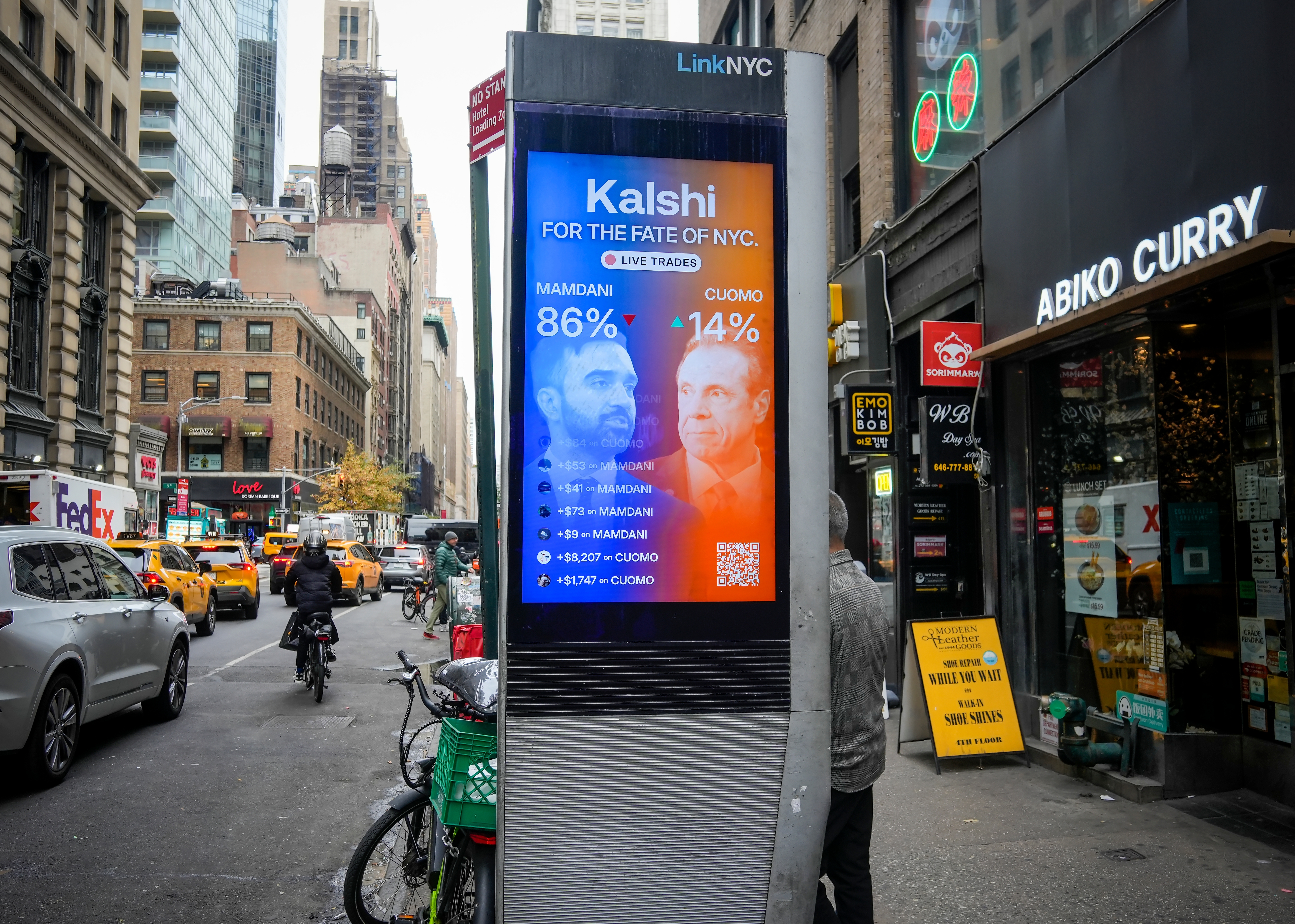
Prediction markets and event contracts reopen these historical lines because they appear, at least on first impression, closer to the archetypal wager or perhaps, because of its singular retail focus.
The underlying reference is often not a commodity price, interest rate, or deliverable financial asset, but rather an event outcome. That framing invites the classic antigambling arguments: that the transaction risks becoming a contest of chance or sentiment rather than a tool for risk transfer; that it may encourage participation for entertainment rather than commercial purpose; that it can attract aggressive marketing aimed at vulnerable retail participants; and that it can create reputational and legitimacy risks if the public perceives the regulated derivatives framework as permitting what looks like wagering on civic processes or cultural events.
The history also illuminates the conflicts of interest concerns emphasized in the CFTC’s request for comment. Many of the strongest historical criticisms of gambling venues were not only about the act of wagering, but about the incentives of the venue itself. When the house profits from customer losses, when information advantages are concentrated, or when the same enterprise controls access, pricing, and settlement, concerns about fairness and integrity grow. Those themes are visible in modern questions about vertical integration, affiliated intermediaries, and whether retail participants receive protections comparable to those traditionally provided through FCM intermediation. In other words, the debate is not simply whether retail participants should be allowed to speculate or gamble (depending on how one views these contracts). It is whether the market structure includes the safeguards, governance, and conflicts controls needed to keep the world’s largest regulated derivatives markets conformed with its historical purposes.
None of this history compels a single outcome for prediction markets. It does, however, explain why regulators repeatedly return to the same foundational inquiries: whether a product serves recognized economic functions, whether the structure prevents abusive practices, and whether conflicts of interest are constrained rather than merely disclosed.
In that sense, the CFTC’s current request for comment fits within a much longer arc of law and policy that has tried to separate legitimate risk transfer and price discovery from wagers that public policy has historically viewed as socially costly.
NB: This post is for informational purposes only and does not constitute legal advice. If you would like to discuss how evolving CFTC oversight of retail direct clearing and prediction markets may affect your business model, compliance program, or market participation strategy, give us a call.
Sources:
Commodity Futures Trading Comm’n, Chairman Selig Launches the CFTC Innovation Advisory Committee, Release No. 9167-26 (Jan. 12, 2026), https://www.cftc.gov/PressRoom/PressReleases/9167-26.
Commodity Futures Trading Comm’n, Acting Chairman Pham Announces CEO Innovation Council Participants, Release No. 9150-25 (Dec. 10, 2025), https://www.cftc.gov/PressRoom/PressReleases/9150-25.
Letter from Sen. Catherine Cortez Masto et al. to Michael S. Selig, Chairman, Commodity Futures Trading Comm’n (Jan. 11, 2026), https://www.cortezmasto.senate.gov/wp-content/uploads/2026/01/2026-January-Cortez-Masto-et-al-Letter-to-CFTC-Chair-Selig-re-Suspicious-Polymarket-Trade.pdf.
Commodity Futures Trading Comm’n, CFTC Staff Seek Public Comment on Direct Clearing by Retail Participants, Release No. 9158-25 (Dec. 18, 2025), https://www.cftc.gov/PressRoom/PressReleases/9158-25.
Commodity Futures Trading Comm’n Staff, Request for Comment on the Direct Clearing of Derivatives by Retail Participants, https://www.cftc.gov/media/12861/DerivativesRetailInvestors_RFC121725/download (last visited Jan. 13, 2026).
Commodity Futures Trading Comm’n, Comments for General CFTC Request for Comment on the Direct Clearing of Derivatives by Retail Investors, https://comments.cftc.gov/PublicComments/CommentList.aspx?id=7641 (last visited Jan. 13, 2026).
Commodity Exchange Act, 7 U.S.C. § 1a(15), (28) (2022).
7 U.S.C. § 9 (2022).
17 C.F.R. § 1.20 (2025).
17 C.F.R. §§ 39.19, 39.25 (2025).
17 C.F.R. § 40.11 (2025).
Provisions Common to Registered Entities, 76 Fed. Reg. 44,776 (July 27, 2011).
Dan Glimne, Gambling, Encyclopaedia Britannica (last updated Dec. 12, 2025), https://www.britannica.com/topic/gambling (last visited Jan. 13, 2026).
Justine Crump, The Perils of Play: Eighteenth-Century Ideas About Gambling (Ctr. for Hist. & Econ. 2004), https://www.histecon.magd.cam.ac.uk/docs/crump_perils.pdf (last visited Jan. 13, 2026).
Gaming Act 1845, 8 & 9 Vict. c. 109 (U.K.).
Irwin v. Williar, 110 U.S. 499 (1884).
Bd. of Trade of Chi. v. Christie Grain & Stock Co., 198 U.S. 236 (1905).
Gatewood v. North Carolina, 203 U.S. 531 (1906).
Bd. of Trade of Chi. v. Olsen, 262 U.S. 1 (1923).
Grain Futures Act, ch. 369, 42 Stat. 998 (1922).
Commodity Futures Trading Comm’n, Economic Purpose of Futures Markets and How They Work, https://www.cftc.gov/LearnAndProtect/AdvisoriesAndArticles/economicpurpose.html (last visited Jan. 13, 2026).
Presidential Task Force on Market Mechanisms, Report of the Presidential Task Force on Market Mechanisms (Jan. 8, 1988), https://www.sechistorical.org/collection/papers/1980/1988_0101_BradyReport.pdf.
President’s Working Group on Fin. Mkts., Hedge Funds, Leverage, and the Lessons of Long-Term Capital Management (Apr. 28, 1999), https://home.treasury.gov/system/files/236/hedgfund.pdf.
U.S. Gen. Acct. Off., Long-Term Capital Management: Regulators Need to Focus Greater Attention on Systemic Risk, GAO/GGD-00-3 (Oct. 29, 1999), https://www.gao.gov/products/ggd-00-3.
Fin. Crisis Inquiry Comm’n, The Financial Crisis Inquiry Report: Final Report of the National Commission on the Causes of the Financial and Economic Crisis in the United States (Jan. 2011), https://fcic-static.law.stanford.edu/cdn_media/fcic-reports/fcic_final_report_full.pdf.
John Kenneth Galbraith, The Great Crash, 1929 (Houghton Mifflin 1955).
Charles P. Kindleberger & Robert Z. Aliber, Manias, Panics, and Crashes: A History of Financial Crises (7th ed. 2015).
CME Grp., FanDuel and CME Group Launch FanDuel Predicts to Give Customers the Power to Trade on Tomorrow’s Headlines (Dec. 22, 2025), https://www.cmegroup.com/media-room/press-releases/2025/12/22/fanduel-and-cme-group-launch-fanduel-predicts.html.