
Capital Markets Alliance v. CFTC: What the Stock Perpetual Futures Lawsuit Gets Wrong
By R Tamara de Silva, Managing Partner, De Silva Law Offices, LLC
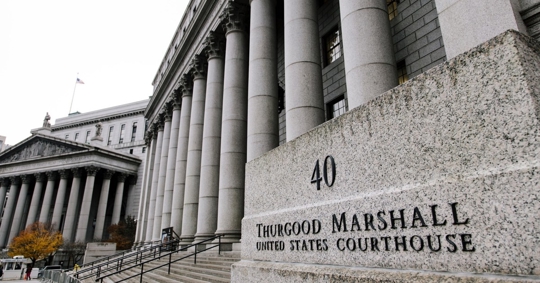
On November 3, 2026, the CFTC cleared perpetual futures on individual U.S. stocks to trade on CFTC-registered exchanges. These are leveraged contracts that track a stock’s price and have no expiration date. Within hours, the Capital Markets Alliance Association sued the CFTC in federal court in Manhattan and asked for an emergency order to stop the trading. Its members include Cboe Global Markets, Citadel Securities and the Healthy Markets Association. The Alliance says the contracts are security-based swaps that only the SEC may regulate, and that retail investors may not trade them on these exchanges.
The complaint leaves out the facts that cut against it. It never mentions payment for order flow or dark pools, or that about half of U.S. stock trading takes place off-exchange. It does not mention the protections futures customers already have. It does not mention that single-stock futures traded in the United States for almost two decades.
The court denied emergency relief because the Alliance’s evidence of harm was “conjectural.” The same order found the Alliance likely to win on the merits. That finding takes up one paragraph and does not mention the cases that point the other way.
The Real Injury Is Competition…Lost Fees
The Alliance describes itself as bringing together “some of the most significant institutions in American finance.” Its membership “spans the regulated ecosystem through which U.S. stocks and stock-linked derivatives are traded, executed, and priced” (Compl. ¶ 17).
Its members run stock and options exchanges, execute retail and institutional orders, and make markets. One member is itself an association whose members include public pension funds, investment advisers, broker-dealers, exchanges and data firms.
The complaint is candid about why these firms want relief. It calls single-stock perpetuals “a direct competitor to stocks and related derivatives (such as listed stock options)” (¶ 21). It says the approvals put members “at an unfair competitive disadvantage” (¶ 24).
It then lists what they stand to lose: exchange transaction fees and market data revenue, broker-dealer revenue and “potentially the customer relationship,” and market makers’ trading revenue (¶¶ 25–27). When the complaint explains why that harm is irreparable, the answer is lost fees (¶ 117).
The investor-protection arguments come later. Most of them concern retail investors, who are not Alliance members.
What the Complaint Leaves Out
Perhaps the more interesting thing about the complaint is what it omits. The facts the complaint leaves out are the inconvenient ones. Each goes to the heart of its proffered picture of a transparent, fully protected stock market set against a less protective futures market.
About Half of Stock Trading Never Reaches an Exchange
The complaint presents the stock market as a transparent system operating under the SEC’s “full framework.” Market makers, it says, lose trades that “could have been executed through a trading venue regulated under the SEC’s full framework” (¶ 27). It faults the futures markets for having “no consolidated tape, consolidated audit trail, or public order-routing disclosure regime” (¶ 53).
The complaint never says how much stock trading happens away from exchanges. Off-exchange trading reached a record 50.61% of U.S. equity volume in 2025, according to Rosenblatt Securities. That trading takes place in dark pools and other opaque venues, and through wholesalers that fill retail orders internally instead of sending them to an exchange.
The words “dark pool,” “wholesaler” and “off-exchange” do not appear in the complaint.
Payment for Order Flow
The complaint does not mention payment for order flow either. Wholesalers commonly pay brokers to send them retail orders. In the first quarter of 2025, market makers paid a record $1.19 billion for U.S. retail order flow, according to Global Trading. Citadel Securities, one of the Alliance’s publicly identified members, paid $388 million of that, more than any other firm.
The omission matters. One of the retail protections the complaint lists is a broker’s duty to disclose “where it routes orders and what is paid for them” (¶ 41). That rule exists largely because of payment for order flow. The complaint does not say who makes those payments. Firms like Citadel Securities do.
The futures markets work differently. A customer’s order on a designated contract market goes to the exchange’s central order book. It is not sold to a wholesaler and filled away from the exchange.
That structure is more transparent. Bids and offers are posted on the exchange for all participants to see. A retail order competes with every other order on the book, including orders from institutions, under the exchange’s published matching rules. The exchange reports every trade. It must also publish settlement prices, volume and open interest every day.
The stock market treats retail orders differently. In 2022, the SEC found that retail brokers route more than 90 percent of individual investors’ marketable orders to wholesalers. The wholesalers “typically execute these orders internally without providing any opportunity for other market participants” to compete for them.
A futures exchange also keeps an audit trail of every order, change and cancellation. The exchange and the CFTC use that record to watch for manipulation. Trades made away from the order book, such as block trades, must be reported to the exchange. The complaint points to platforms that use affiliates to trade against their own customers, a conflict the CFTC has proposed rules to address (¶ 55). Even so, an affiliate’s orders go through the same order book and appear in the same audit trail. There is no hidden layer of retail executions to reconstruct.
The consolidated tape by contrast exists to pull together prices from many competing stock venues. A perpetual contract trades on the exchange that lists it, so there is no fragmented market to consolidate.
The Same Protections Exist in the Futures Markets
The complaint lists the protections a retail investor has in the securities markets and calls them “concrete” (¶ 41). The same protections exist in the futures markets, under different rules. The complaint does not mention them. It never refers to futures commission merchants, the National Futures Association or the segregation of futures customer funds.
What the complaint cites (¶ 41) | Futures-market counterpart |
Broker-dealer registration with the SEC and FINRA membership | Registration with the CFTC as a futures commission merchant or introducing broker, and NFA membership. For these contracts, Kalshi’s rules also require firms handling customer orders to be registered or notice-registered as broker-dealers and to follow NFA sales-practice rules. |
Best execution (FINRA Rule 5310) | Orders must be executed openly and competitively on the exchange. Retail orders are not internalized off-exchange. |
Disclosure of order routing and payment for order flow (SEC Rule 606) | Orders go to the exchange that lists the contract, so there is no routing payment to disclose. |
Protection of customer cash and securities (SEC Rule 15c3-3) | Segregation of customer funds, required of futures commission merchants since the Commodity Exchange Act of 1936. |
Margin limits (Regulation T) | A 15% minimum margin for security futures, set jointly by the SEC and the CFTC (¶ 58), with positions marked to market at least daily. |
SIPC protection if the broker fails | Priority for customer property if a futures commission merchant fails, and SIPC coverage for security futures held in a securities account. |
The complaint warns about leverage. Its example is that with margin of about 15%, $1,000 controls roughly $6,500 of stock (¶ 119). The exchanges did not pick that 15% figure. It is the minimum margin for security futures, set jointly by the SEC and the CFTC (¶ 58). The leverage the complaint warns about comes from a rule the SEC helped write.
Retail investors can already get more leverage than that in the stock market. A listed option can give exposure to many times what it costs, and Alliance members list and trade those options. Leverage is not a reason to treat these contracts differently from products the Alliance’s own members already offer.
Congress Created Single-Stock Futures in 2000
The complaint never mentions single-stock futures. That omission matters. The complaint says the CFTC permitted “an end-run around Congress’s deliberate statutory protections” and “invited a parallel, synthetic market in U.S. stocks to grow outside the exclusive jurisdiction” of the SEC (¶ 1). It describes that market as if it were new.
However, Congress created that market more than 25 years ago. The Commodity Futures Modernization Act of 2000 lifted the ban on futures on individual stocks. It placed them under the joint jurisdiction of the CFTC and the SEC. The SEC has never had exclusive jurisdiction over them.
The market was also a real one. OneChicago listed single-stock futures from 2002 until it closed in 2020, and retail customers could trade them through their brokers. Its owners included CBOE Holdings, now Cboe Global Markets. CME adopted rules this July to list cash-settled single-stock futures.
The complaint refers to “security futures” only as a legal category (¶¶ 57–60). It never says that these contracts traded here for almost two decades, or that retail investors could trade them. It does not say that Cboe, under its former name, was one of the owners of the exchange that listed them.
Kalshi, Coinbase and Bitnomial filed their contracts under this same regime, as security futures subject to the rules of both agencies. The only new feature is the perpetual structure. As discussed below, whether that feature disqualifies them is a closer question than the complaint suggests.
The 2008 Crisis Was About Unregulated Credit Default Swaps
To make its case, the complaint reaches back to the 2008 financial crisis, telling the court that Congress restricted security-based swaps “[g]iven the central role that swaps played in the 2008 financial crisis” (¶ 3). It also describes derivatives that let institutions take “enormous positions, on little capital, in instruments no regulator could see” (¶ 63), without ever saying which swaps it has in mind. The omission does a lot of work.
The swaps at the center of the crisis were credit default swaps, most famously the ones AIG wrote, and the complaint mentions neither. Those swaps were privately negotiated, uncleared and largely unregulated. On each of those points, single-stock perpetuals are the opposite. They are listed on regulated exchanges, cleared through regulated clearinghouses, margined and marked to market at least daily, and recorded in exchange audit trails that regulators can see.
When Congress answered the crisis in Dodd-Frank, it moved swaps onto regulated platforms and into central clearing, but it did not bar retail investors from swaps. Retail swaps must trade on a designated contract market, 7 U.S.C. § 2(e), and retail security-based swaps on a national securities exchange with an effective registration statement, 15 U.S.C. §§ 77e(e), 78f(l).
Even on the Alliance’s own theory, then, retail investors could trade single-stock perpetuals on a national securities exchange, the kind of exchange Cboe and Nasdaq operate. The court framed the merits question as whether the CFTC may allow these contracts “to be offered to retail investors on CFTC-regulated platforms” (Order ¶ 2). Read that way, the disagreement is over which exchange gets the business.
The Comment Record
The complaint says the CFTC approved these contracts “without a word explaining how its action comports with the statutory framework” (¶ 1). The complaint’s own account of the record says otherwise.
CFTC staff requested public comment on perpetual contracts in April 2025 and received more than 150 comments (¶ 98). In June 2026, the CFTC published a policy statement on perpetual contracts and joined the SEC in a request for comment that asked specifically about perpetuals on equity securities (¶¶ 102–103). The September applications were posted publicly. The Alliance, Cboe, Healthy Markets and others filed comment letters before the review period ended (¶¶ 34, 115).
Chairman Selig’s November 3 statement explains that the contracts were approved as security futures under the CFMA and are subject to both agencies’ rules. The Alliance disagrees with the CFTC’s conclusion. That is not the same as the CFTC saying nothing.
The Complaint’s Hyperbole
The complaint’s language often outruns the record. The CFTC “dramatically upended” the regulatory framework (¶ 1), “abdicated its statutory responsibility” (¶ 6), took its “most egregious” step yet (¶ 8), “plowed ahead” (¶ 115) and “rubber-stamped” the applications (¶ 127).
The complaint also claims the CFTC and the SEC “have always considered” these and similar products to be security-based swaps (¶ 5). Its support consists largely of enforcement complaints and settlements involving offshore crypto platforms, in which no court had to decide the question.
What the CFTC actually did was follow its own approval rule. The Commodity Exchange Act directs the CFTC to approve a new contract unless it finds a violation, 7 U.S.C. § 7a-2(c)(5)(B). Under CFTC Rule 40.3, a request is deemed approved if the CFTC does not act within the review period.
The SEC, whose jurisdiction the CFTC supposedly took, is not a party. In a statement shared with Law360, it said it supports bringing these products to U.S. markets “within a framework of comprehensive oversight and investor protection.” An agency that follows its own rules, with the support of the other agency involved, has not abdicated anything.
The Harm Case Does Not Hold Up
In Capital Markets Alliance Association v. CFTC, No. 1:26-cv-09608 (S.D.N.Y.), Judge Valerie Caproni denied the temporary restraining order. She found that the Alliance’s three declarations were “conjectural as to the harm Plaintiff’s members would suffer, focusing on harmful events that could occur” (Order ¶ 4, Dkt. 14).
Harm must be “neither remote nor speculative, but actual and imminent.” Faiveley Transp. Malmo AB v. Wabtec Corp., 559 F.3d 110, 118 (2d Cir. 2009). The Alliance’s request for a preliminary injunction is now being briefed. Unless it brings better evidence, it has the same problem.
The headline figure is $11 billion a day. The complaint says “a diversion of even just one percent of U.S. equity trading volume onshore would move $11 billion in trading each day out of the SEC-regulated securities ecosystem” (¶ 32). That is arithmetic on an assumed percentage. The complaint does not estimate how much trading will move, when, or from where.
Where the trading comes from matters. If it comes from dark pools and wholesalers, it was never exchange trading, and the exchange fees the complaint describes are not what is lost. If it comes from offshore crypto platforms, it was never part of the U.S. stock market at all. The complaint’s own figures show that demand already exists offshore: monthly volume in stock perpetuals on offshore platforms reached nearly $700 billion in August (¶ 32).
The complaint also never considers how the two markets and their users interact. Firms that make markets in stock perpetuals often hedge in the underlying stock, so perpetual trading can create stock trading, as options market making does. Funding payments tie each contract to its stock’s price, so arbitrage traders work both markets.
And the customers of a prediction market or crypto exchange are not necessarily people who would otherwise buy shares or options through an Alliance member.
The complaint counts only what Alliance members might lose. It gives no weight to the liquidity that retail traders and market makers outside the Alliance would add. A product that draws new participants into a regulated U.S. market adds to that market.
The Alliance’s answer on irreparability is that sovereign immunity bars any damages claim against the CFTC, so any lost fee is gone for good (¶ 117). That goes to whether a loss could be recovered. It does not show that a loss is likely.
The rest of the complaint’s harm discussion concerns retail investors and the markets generally (¶¶ 118–122). Those are public-interest arguments, not injuries to the Alliance’s members.
The Order’s Merits Finding Is Conclusory
The order’s merits analysis is one paragraph (Order ¶ 2). It was written on an emergency basis after a teleconference, before the CFTC had filed its opposition. Respectfully, it is conclusory.
The order reasons that because perpetual contracts, “by definition, do not provide for a ‘sale for future delivery of a single security,’” they cannot be security futures. Apart from the statute, the only authority it cites is one sentence from Leist v. Simplot, 638 F.2d 283, 286 (2d Cir. 1980): “The seller of [a futures] contract commits himself to deliver the commodity at a fixed date in the future.” The order adds emphasis to “fixed date.”
Leist arose from the 1976 default in Maine potato futures. The issue was whether traders could sue under the Commodity Exchange Act. The sentence describes how a typical futures contract works. The court was not deciding whether a contract without a fixed date can be one.
The order does not address the authority on the other side. The Seventh Circuit treated index participations, which it described as “contracts of indefinite duration,” as futures within the CFTC’s exclusive jurisdiction. Chicago Mercantile Exchange v. SEC, 883 F.2d 537 (7th Cir. 1989).
A judge in the Southern District of New York treated contracts of indefinite duration as futures in CFTC v. Int’l Fin. Servs. (N.Y.), Inc., 323 F. Supp. 2d 482 (S.D.N.Y. 2004), a case the complaint itself cites (¶ 96). The complaint tries to distinguish these decisions. The order does not mention them.
Nor does the order look at the contracts’ terms. It reasons from the word “perpetual.” Yet the complaint acknowledges that some of the proposed contracts provide for final cash settlement on specified events (¶ 77 n.34). Kalshi’s rules provide delisting and final settlement procedures for any contract whose stock stops meeting listing standards. Most futures positions are closed by offset rather than held to delivery, and a perpetual position can be closed out at any time.
The order also states that swaps are “subject to regulation by the Securities and Exchange Commission, not by CFTC” (Order ¶ 2). That is not correct as written. The CFTC regulates swaps. The SEC regulates security-based swaps, which are swaps based on a single security or a narrow-based security index. The order cites the security-based swap definition, so that is presumably what it meant. In a case about which agency has jurisdiction, the distinction matters.
Finally, the order finds that the balance of equities and the public interest favor the Alliance because “[t]he CFTC’s actions seem to represent a major disruption to the equities market” (Order ¶ 3). It cites nothing for that conclusion.
That finding is hard to reconcile with the court’s conclusion, in the very next paragraph, that the Alliance’s evidence of harm to its members was conjectural. Those members include equity exchanges and market makers. And the SEC, which regulates the equities market, has said it supports the approvals.
A Turf Battle Over Fees
The complaint casts this case as a choice between the protections of the securities laws and much weaker ones. The contracts at issue, though, trade on regulated exchanges, clear through regulated clearinghouses and reach customers through intermediaries registered with both the CFTC and the SEC. Set aside the references to 2008 and the warnings about retail investors, and what remains is a turf battle between regulated markets. By the Alliance’s own account, what its members stand to lose is fees and order flow.
Until the court rules, these contracts can trade, but exchanges, intermediaries and traders should plan for the possibility, which the complaint itself raises, that a later ruling forces open positions to be closed or transferred (¶ 122).
NB: This article is for general informational purposes only and is not legal advice. Reading it does not create an attorney-client relationship. It reflects developments through November 4, 2026, and the litigation is ongoing. De Silva Law Offices, LLC represents clients in matters involving the SEC, CFTC, CFTC-registered exchanges and prediction markets.