
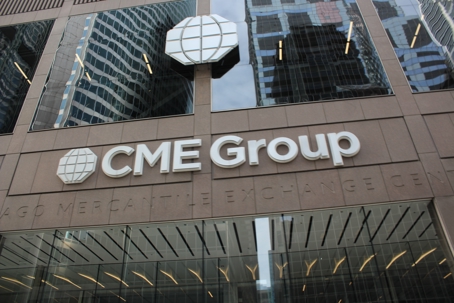
CME Group v. CFTC: Why the Kalshi Bitcoin Perpetual Futures Lawsuit Could Reshape Crypto Derivatives Regulation
By R Tamara de Silva | De Silva Law Offices, LLC | June 20, 2026
An edited version of this article was published by Law360 as "How CME Suit May Reshape CFTC's Crypto Derivatives Rules" (July 21, 2026).
On May 29, 2026, a single federal official, acting alone and without public comment, rewrote the regulatory classification of an entire category of derivative instruments that had never before been legally traded in the United States. Three weeks later, the Chicago Mercantile Exchange filed suit in federal court to undo it. What sits at the center of this dispute is a question that sounds technical but carries enormous practical consequences: is a perpetual contract a swap, or is it a future?
The answer matters for tax treatment, for margin requirements, for who has to register with whom, and for whether Congress's post-2008 financial crisis reforms mean what they say.
What Is a Perpetual Contract?
Before getting to the lawsuit, it helps to understand what a perpetual contract actually is.
A perpetual contract is a derivative instrument designed to track the spot price of an underlying asset, in this case Bitcoin. It functions like a futures contract in that traders can go long or short. But it differs from a futures contract in one fundamental respect: it has no expiration date. You can hold the position forever. That is where the name comes from.
To keep the contract's price tethered to the spot price of the underlying asset, perpetuals use a mechanism called a "funding rate." When the perpetual trades above spot, long-side holders pay the short side. When it trades below spot, the short side pays the long side. These periodic payments incentivize the market to keep the perpetual price close to spot. No Bitcoin is ever delivered. No cash settlement occurs at a fixed date. The contract simply continues, funded, floating, and indefinite.
Perpetual contracts have been enormously popular offshore, particularly on crypto exchanges like Binance and BitMEX. Before May 29, 2026, they were not available on regulated U.S. exchanges.
What the CFTC Did
On May 28, 2026, Kalshi, a designated contract market best known for its prediction market products, submitted an application to the CFTC seeking approval to list a Bitcoin perpetual contract as a futures product. This was not a routine application. The CFTC's own regulations give it 45 days to review new product applications, with an additional 45 days available for products raising "novel or complex issues." Extensions beyond that are available by written agreement. One prior CME product approval took 1,834 days.
The CFTC decided Kalshi's application in one day.
Chairman Michael Selig, currently the CFTC's sole confirmed Commissioner out of five seats the statute contemplates, approved the application on May 29, 2026 and simultaneously issued a Policy Statement authorizing all DCMs to self-certify similar cryptocurrency perpetual contracts as futures without prior Commission review. No public comment. No engagement with the 150-plus comments the CFTC had already received in response to its own April 2025 Request for Comment on exactly this classification question.
Within a week, Kalshi had self-certified over a dozen additional cryptocurrency perpetuals. Trading volume crossed one billion dollars. The CFTC issued a no-action letter to Coinbase permitting similar listings. A second no-action letter followed, allowing DCMs to simply remove expiration dates from existing crypto futures contracts and convert them into perpetuals.
The CFTC's Response, and Why It Is Not an Answer
When asked about the lawsuit, a CFTC spokesperson told Law360 that it is "frivolous," adding: "Rather than compete in the marketplace, the CME has decided to undertake lawfare against the agency and the Trump Administration's pro-innovation agenda. Incumbents fear the future and having to compete on a level playing field." Kalshi's spokesperson offered the same framing: "This isn't about the law, it's about the fear of competition."
These responses are politically effective and legally empty. Notice what neither the CFTC nor Kalshi did: they did not defend the statutory classification. They did not explain why a contract with no expiration date and no delivery obligation satisfies the CEA's definition of "contract of sale of a commodity for future delivery." They did not address the CFTC's own enforcement history, the Binance complaint, the BitMEX complaint, the consent orders, in which the agency's own lawyers argued in federal court that perpetual contracts are swaps. "Pro-innovation agenda" is not an answer to 7 U.S.C. § 1a(47). "Fear of competition" is not a response to Salomon Forex, Inc. v. Tauber, in which the Fourth Circuit described a futures contract as one requiring delivery of a commodity on a date certain,¹ or to CFTC v. Erskine, in which the Sixth Circuit analyzed whether foreign-currency contracts qualified as futures under the CEA and framed the inquiry around whether a contract calls for performance "at or before a stated future time."2
Chairman Selig's own statements reinforce the point. At the Milken Institute in March, he said: "We need to have that liquidity here in the U.S., and we need the right investor protections to ensure that these firms don't blow up and affect our shores." That is a legitimate policy goal. But the mechanism for achieving it, an overnight approval by a single Commissioner without public comment, without engaging the swap definition, and without explaining the departure from years of enforcement precedent, is precisely what the APA is designed to prevent. Policy ambitions do not override statutory text, and they do not substitute for reasoned decisionmaking.
Why CME Is Suing
CME Group Inc. is the world's largest derivatives marketplace. Its subsidiary CME has listed Bitcoin futures since 2017, including the Micro Bitcoin contract, a retail-sized product explicitly designed to bring smaller investors into regulated cryptocurrency futures markets. Kalshi's Bitcoin perpetual is aimed directly at that same customer. Kalshi's CEO Tarek Mansour has said so publicly: "CME has Bitcoin futures and Kalshi has Bitcoin perpetuals." He has characterized perpetuals as putting "competitive pressure" on CME's rollover fees and called Kalshi "a next-generation CME for the 21st century."
CME's competitive injury theory, in other words, is not a stretch.
But CME's lawsuit is not primarily about competition. It is about statutory text.
The Legal Arguments
Count One: The CFTC Violated the Commodity Exchange Act
The core of CME's case rests on the Commodity Exchange Act's definitions of "swap" and "contract of sale of a commodity for future delivery," which is the legal term for what the rest of us call a futures contract.
After the 2008 financial crisis, Congress passed Dodd-Frank and for the first time added a formal definition of "swap" to the CEA. That definition is broad by design. A swap is any agreement that provides for the exchange of one or more payments based on the value of a commodity, transfers financial risk between the parties, and does so without conveying a current or future ownership interest in the underlying asset. Swaps are excluded from the definition of futures, and futures are excluded from the definition of swaps.
A perpetual contract fits the swap definition almost precisely. The funding payments are payments based on the value of Bitcoin. The contract transfers price risk between the long and short sides. No Bitcoin is delivered. There is no date certain at which any ownership interest changes hands, or ever will.
A futures contract, by contrast, requires "future delivery," meaning a fixed date at which the commodity or its cash equivalent is tendered. Every court that has examined the question has said so. In Salomon Forex, Inc. v. Tauber, the Fourth Circuit described a futures contract as one calling for delivery of a commodity on a date certain.³ In CFTC v. Erskine, the Sixth Circuit, applying the CEA to off-exchange foreign-currency contracts, framed a futures contract as one requiring performance "at or before a stated future time."⁴ And in Hunter v. FERC, the D.C. Circuit, quoting the Second Circuit, explained that "a commodities futures contract is an executory contract for the sale of a commodity executed at a specific point in time with delivery of the commodity postponed to a future date."⁵ The CFTC's own glossary defines a futures contract as requiring delivery in the future at a price determined at inception.
A perpetual contract has no delivery date. By definition, it cannot be a "contract of sale of a commodity for future delivery."
The CFTC's Own Prior Position Makes This Worse
What makes the CFTC's approval particularly difficult to defend is that the agency has spent years classifying perpetual contracts as swaps in its own enforcement actions.
In its 2023 action against Binance, the CFTC stated plainly that "Binance's perpetuals are swaps," citing the contracts' funding-fee mechanism, their transfer of price risk between parties, and their lack of any predetermined expiration date.⁶ The agency took the same position against BitMEX, Mango Markets, Deridex, and KuCoin.⁷ These were not staff opinions or informal guidance. They were enforcement complaints and consent orders filed in federal court.
Then, in April 2025, the CFTC issued a formal Request for Comment asking the public to weigh in on sixteen questions about perpetuals, including the threshold question of whether they should be classified as swaps or futures. The agency received more than 150 responses. ⁸
It addressed none of them.
Instead, one day after receiving Kalshi's application, it approved the product as a future in an order that does not mention the word "swap" and does not cite the Dodd-Frank provision defining swaps. The CFTC's order, as CME notes in the complaint, essentially reproduces Kalshi's own application, including its reliance on pre-Dodd-Frank case law that predates the very statutory provision at issue.
Count Two: The Decision Was Arbitrary and Capricious
CME's second claim is an Administrative Procedure Act challenge. Under the APA, agency decisions must be reasoned, meaning the agency must analyze the applicable law, acknowledge departures from prior positions, and grapple with the important implications of what it is doing. An agency cannot simply rubber-stamp a regulated party's analysis and call it a decision.
The D.C. Circuit addressed this directly in Affirmed Energy v. FERC, decided just this year: "An agency's decision is arbitrary and capricious if it merely rubberstamps a regulated party's analysis."
CME's complaint is detailed on this point. The CFTC's order reproduces Kalshi's arguments and relies exclusively on pre-Dodd-Frank case law, the same authorities Kalshi cited. It does not acknowledge that the agency has consistently classified perpetuals as swaps in enforcement actions going back to 2020. It does not explain why that position is being abandoned. It does not engage with what the APA requires agencies to address as the "important aspects of the problem." And it openly acknowledges that the CFTC "expects in the future to address the regulatory treatment of, and compliance considerations relating to, perpetual contracts more generally," which is an admission that the analysis required before acting had not yet been done.
Under Encino Motorcars v. Navarro and FCC v. Fox Television Stations, when an agency changes an established position, it must acknowledge the change and provide a reasoned explanation. The CFTC did neither.
What Happens Now
CME filed this complaint on June 18, 2026 in the U.S. District Court for the District of Columbia. It seeks vacatur of both the Kalshi Order and the Policy Statement, and a declaration that cryptocurrency perpetual contracts are swaps, not futures, under the CEA.
The venue is well-chosen. D.C. Circuit APA jurisprudence on reasoned decisionmaking is developed, demanding, and generally skeptical of agency shortcuts. Post-Loper Bright, the CFTC gets no deference on its statutory interpretation. The court will read the CEA for itself.
A preliminary injunction motion seems likely to follow. The irreparable harm argument writes itself: a market built on an unlawful classification, with trading volumes already in the billions, growing every day.
What This Means for Market Participants
If the court vacates the Kalshi Order and Policy Statement, the consequences cascade. The self-certified perpetual contracts come off the market as futures. Participants who traded them under the futures regulatory framework, with futures-specific margin treatment, no swap dealer registration, and Section 1256 tax treatment, face potential reclassification. The DCMs that self-certified these products without prior approval did so in reliance on a CFTC order that may be unwound.
None of this means the perpetuals market in the United States is finished. It means that the correct path, if perpetuals are to trade domestically as futures, required notice-and-comment rulemaking rather than an overnight order by a single Commissioner. Congress designed the regulatory process for swaps carefully, for reasons that became painfully clear in 2008. Those requirements do not disappear because a product is popular offshore or because a regulator believes the market would benefit from bringing it onshore.
Endnotes:
¹ Salomon Forex, Inc. v. Tauber, 8 F.3d 966, 971 (4th Cir. 1993).
² CFTC v. Erskine, 512 F.3d 309, 323 (6th Cir. 2008).
³ Salomon Forex, Inc. v. Tauber, 8 F.3d 966, 971 (4th Cir. 1993).
⁴ CFTC v. Erskine, 512 F.3d 309, 323 (6th Cir. 2008).
⁵ Hunter v. FERC, 711 F.3d 155, 156 (D.C. Cir. 2013).
⁶ Compl. ¶ 62, CFTC v. Zhao, No. 23-cv-1887 (N.D. Ill. Mar. 27, 2023), ECF No. 1.
⁷ See Compl. ¶ 125, CFTC v. HDR Global Trading Ltd., No. 20-cv-8132 (S.D.N.Y. Oct. 1, 2020) (BitMEX); Compl. ¶ 23, CFTC v. Eisenberg, No. 23-cv-173 (S.D.N.Y. Jan. 9, 2023) (Mango Markets); Consent Order at 5, In re Deridex, Inc., CFTC No. 23-42 (Sept. 7, 2023); Compl. ¶ 41, CFTC v. Mek Global Ltd., No. 24-cv-2255 (S.D.N.Y. Mar. 26, 2024) (KuCoin).
⁸ CFTC, Request for Comment on the Trading and Clearing of "Perpetual" Style Derivatives (Apr. 21, 2025).
De Silva Law Offices, LLC advises exchanges, intermediaries, and market participants on CFTC and NFA regulatory matters, including derivatives classification, registration, and enforcement defense. Questions about this article or the firm's practice may be directed to tamara@desilvalawoffices.com.
De Silva Law Offices, LLC | 110 North Wacker Drive, Suite 2500, Chicago, IL 60606 | 312-500-8424 | desilvalawoffices.com
This article is for informational purposes only and does not constitute legal advice. Reading this article does not create an attorney-client relationship.