
Is This the Largest Insider Trading Pattern in Commodity Futures History?
It happened again.
At 3:40 a.m. Eastern on May 6, 2026, nearly 10,000 crude oil short contracts hit the tape. No news catalyst had broken. No scheduled data release was imminent. The notional value of the position was approximately $920 million. It was an unusually large block for a window when most of the Western Hemisphere is asleep.
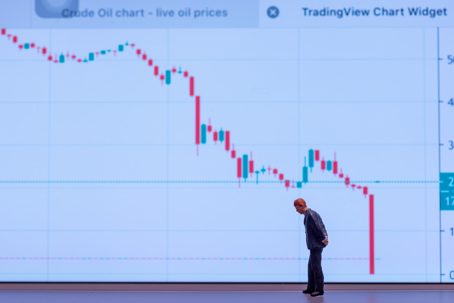
Seventy minutes later, at 4:50 a.m., Axios reported that the United States and Iran are closing in on a one-page, fourteen-point memorandum of understanding to end the war and begin a thirty-day negotiation period covering Hormuz, sanctions relief, and a moratorium on Iranian nuclear enrichment. By 7:00 a.m., crude oil had fallen over twelve percent. The short position was sitting on approximately $125 million in paper profits.
Then the counterpunch. Minutes after the deal headlines hit, Iran launched the “Persian Gulf Strait Authority,” a new regulatory body asserting sovereign governance over the Strait of Hormuz, requiring all vessels to register, obtain transit permits, and pay tolls. Oil surged eight percent off the lows.
Anyone holding those shorts covered into a $125 million gain. Anyone who bought the dip on peace headlines and held through the PGSA announcement got whipsawed. The informed money was in and out before the complexity hit.
This is the fourth time this has happened since March.
The Pattern
On March 23, approximately $500 to $580 million in crude oil futures changed hands in a single minute at nine times normal volume, fifteen minutes before a Truth Social post describing “productive conversations” with Iran. Oil dropped more than ten percent.
On April 7, approximately $950 million was positioned on falling oil prices hours before a ceasefire announcement that produced a fifteen percent price decline. The Brent leg was exactly 6,200 lots, the same lot size as the March trade.
On April 17, approximately $760 million in shorts landed minutes before Iran’s foreign minister declared the Strait of Hormuz “fully open.”
On May 6, approximately $920 million in shorts hit the tape at 3:40 a.m. Eastern, seventy minutes before the Axios deal report.
The cumulative notional value across these four episodes is approximately $3.1 billion. Every one was directionally correct. Every one preceded an announcement that moved crude by double digits. The blocks were placed during low-liquidity windows where they would have maximum price impact, and the lot sizes are institutional. Nobody trading off a hunch from their couch is putting on 10,000 contracts at 3:40 in the morning.
At some point, the word “coincidence” requires more explaining than the word “pattern.”
There is one additional consistency worth noting. The market-moving reports that followed each of these trades share the same Axios byline: Barak Ravid, the outlet’s Global Affairs Correspondent. This is not an accusation directed at the reporter. Journalists do not control who else knows that a story is about to publish, or who in the source chain becomes aware that a briefing has occurred. But from an investigative standpoint, the consistency of the publication channel narrows the universe of people who could have known, before the story hit the wire, that a market-moving headline was imminent. Someone upstream of publication, whether in the White House, among the intermediaries, or in the orbit of the sources being briefed, appears to have had advance knowledge not only of the policy development but of its timing as a news event. The CFTC’s Tag 50 analysis should be cross-referenced against this source chain.
What the CFTC Already Has
As I wrote in detail last month (“When the Trade Comes Before the Tweet,” April 16, 2026), the CFTC opened a formal investigation on April 15 into the March and April trades. The agency requested Tag 50 identifications from both CME Group and ICE, the electronic identifiers that reveal the entity behind each order. That means the CFTC has already isolated the trades. The question the agency is working to answer is who placed them.
The legal framework is not unsettled. CEA Section 6(c)(1) and CFTC Rule 180.1, modeled on SEC Rule 10b-5, prohibit trading on material nonpublic information obtained through misappropriation. The CFTC has used this theory before, including against a Delta Air Lines fuel hedging director who traded through his wife’s accounts while running the airline’s crude oil hedging strategy.
More directly applicable here is CEA Section 4c(a)(4), the provision known informally as the “Eddie Murphy Rule.” Enacted in 2010 as part of Dodd-Frank, it specifically prohibits government employees from trading on material nonpublic information relating to governmental action, and extends liability to anyone who receives such information from a government source in breach of a duty. CFTC Enforcement Director David Miller identified this provision in his March 31 remarks at NYU Law School, his first major public address, as an active enforcement priority. It has never been tested in a litigated action. That may be about to change.
The May 6 trade adds a fourth data point. The critical question for the CFTC is whether the Tag 50 data across these four episodes leads back to the same counterparty or cluster of counterparties. If it does, the circumstantial case stops being circumstantial. But even if the beneficial owners differ across episodes, you still have a pattern of large directional positioning in thin markets immediately before government announcements. That pattern points to a systematic leak, regardless of how many accounts are on the receiving end of it.
What Gets Broken
This is an enforcement problem, but it is also something worse. It is a market structure problem.
Crude oil futures are not an abstraction. They are the pricing mechanism for physical energy. Airlines hedge jet fuel off these contracts. Refiners hedge crack spreads. Municipalities lock in heating oil costs for public buildings. When someone with advance knowledge of a presidential announcement strips $125 million out of the market before anyone else knows the news is coming, those hedgers are on the wrong side of a trade they never had a fair chance to evaluate.
Retail futures traders get hit even harder. Many hold positions overnight. They cannot react to a 3:40 a.m. block. They wake up stopped out, having absorbed losses that were manufactured by someone else’s informational advantage. If this pattern is what it looks like, this is not a market functioning as designed. It is a wealth transfer mechanism running on leaked government information.
The CFTC has the statutory tools it needs. Rule 180.1 gives it anti-fraud authority modeled on the securities side. Section 4c(a)(4) was written specifically for government insiders trading on policy information. The Tag 50 data from CME and ICE is already in the agency’s hands. Chairman Selig has publicly committed to enforcement. The remaining question is whether the agency will follow the evidence into the orbit of the government officials whose announcements these trades consistently anticipate. That is a political question, not a legal one.
Four for Four
I spent years on the trading floor. You learn to read order flow the way a mechanic listens to an engine. Something is wrong here, and you do not need a law degree to hear it. Four trades, four announcements, four profits. The trades preceded the announcements. The announcements moved the market. The trades were positioned to capture the move.
The Commodity Exchange Act exists because Congress understood that commodity markets only function when participants believe the game is not rigged. That belief is being tested in real time.
The CFTC now has four episodes to investigate instead of two and the ball is in their court. The pattern is getting louder, not quieter.
R Tamara de Silva is Managing Attorney of De Silva Law Offices, LLC, a Chicago-based financial regulatory practice focused on CFTC/NFA enforcement, derivatives, and commodity markets. She is a former futures floor trader. This article is for informational purposes only and does not constitute legal advice.
Related: “When the Trade Comes Before the Tweet: The CFTC’s Insider Trading Investigation” (April 16, 2026)