
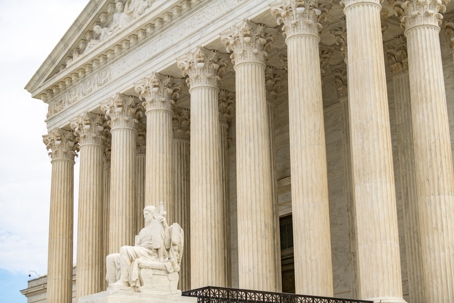
Prediction Markets Head Toward the Supreme Court: Where the Sports Event Contract Litigation Stands
By R Tamara de Silva | De Silva Law Offices, LLC
Update, September 16, 2026. The Ninth Circuit has now ruled on tribal lands as well. In Blue Lake Rancheria v. Kalshi, Inc., No. 25-7504, a unanimous panel reversed the denial of a preliminary injunction sought by two California tribes under the Indian Gaming Regulatory Act, holding that the tribes are likely to succeed on the merits. Writing for the court, Judge McKeown held that Kalshi's sports event contracts are class III gaming under IGRA on a functional test ("Kalshi may reshuffle the cards, but it cannot change the hand"), that a contract entered by a user physically on tribal land is gaming "located on Indian lands" regardless of where Kalshi's servers sit, and that Kalshi's contracts violate the tribes' secretarial procedures and gaming ordinances because class III gaming on those lands is lawful only when tribally authorized and conducted through the tribal regulatory structure. The court rejected Kalshi's arguments that UIGEA displaces IGRA and that the CFTC's exclusive jurisdiction under the Commodity Exchange Act bars the claim, relying on its August 28 decision in Assad that sports event contracts are likely not swaps, and adding that it would reach the same result even if they were, because the CEA does not displace IGRA. The panel affirmed dismissal of the tribes' Lanham Act claim over Kalshi's "Sports Betting Legal in all 50 States" advertising, treating it as nonactionable opinion while the legality question remains unsettled, and remanded for the district court to address the remaining injunction factors. Robinhood and its FCM affiliate are defendants alongside Kalshi, so the decision reaches distribution partners as well as the exchange; a third tribe, Picayune Rancheria, was dismissed from the appeal by stipulation after argument. The decision does not address non-sports event contracts, which remain outside both Ninth Circuit rulings. It is Kalshi's second loss in that circuit in three weeks, it is the first appellate decision to apply IGRA to prediction markets, and it deepens the split with the Third Circuit that is already before the Supreme Court on petitions from New Jersey, Robinhood, and Crypto.com. We will update the state table above as the Fourth and Sixth Circuits rule.
A sports event contract is a simple instrument. A trader buys a "yes" or "no" position on a question about a game, such as whether a team wins or a player scores, and the contract pays a fixed amount if the prediction is right. Kalshi, Crypto.com's derivatives exchange, Robinhood and others list these contracts on exchanges registered with the CFTC. The platforms say the contracts are swaps, and that the Commodity Exchange Act gives the CFTC exclusive jurisdiction over swaps traded on a registered exchange, leaving no role for the states. State gaming regulators say the contracts are sports bets, and that a sports bet needs a state license no matter where it trades.
That disagreement has now reached the Supreme Court's docket. The Third Circuit sided with the platforms in April. The Ninth Circuit sided with the states in August. Within days of each other this month, New Jersey, Crypto.com and Robinhood each asked the Court to resolve the split. The fight is also spreading beyond the appellate courts. Connecticut has ordered nine platforms to stop offering the contracts in the state and has subpoenaed their payment processors and app stores. Underdog, a fantasy-sports operator that bought its own CFTC-registered exchange this year, has sued five states before any of them moved against it. A federal judge in Wisconsin has sent a tribal-law version of the same question to the Seventh Circuit.
This article maps where the litigation stands, the questions the Supreme Court would have to answer if it takes the case, and why the market these cases concern is both larger and narrower than the coverage suggests.
Where Things Stand
The Third Circuit
The Third Circuit, which hears appeals from the federal courts in New Jersey, Pennsylvania and Delaware, was the first court of appeals to rule on the question, and for four months its decision stood as the only appellate authority in the country.
The New Jersey case followed the pattern that most of these cases have followed. In 2025, the state's Division of Gaming Enforcement ordered Kalshi to stop offering sports contracts to New Jersey residents. Kalshi sued in federal court, and the district court enjoined the state from enforcing its sports-wagering law while the case proceeded. On April 6, in KalshiEX LLC v. Flaherty, a divided Third Circuit panel affirmed that injunction.
Judge Porter wrote for the majority. He began with a concession drawn from the dissent itself: "[a] plain reading of the Act's text suggests that Kalshi's sports-event contracts fit comfortably within the statutory definition" of a swap, because the outcome of a game "certainly can be associated with a potential financial, economic, or commercial consequence."[1] The rest of the holding followed from that starting point. If the contracts are swaps, the CFTC's exclusive jurisdiction leaves "no room for supplementary state legislation," and enforcement state by state would recreate "exactly the patchwork that Congress replaced wholecloth by creating the CFTC."[2]
Judge Roth dissented. She did not decide whether the contracts are swaps. She wrote instead that reading the definition to cover them would take it "to its logical extreme," that trading on a DCM is a subfield in which Congress never intended a "complete ouster of state power," and that "Kalshi can comply with both New Jersey and federal law."[3] Each of those points reappeared in the Ninth Circuit's opinion four months later.
Ninth Circuit
The Nevada cases took the same path to the opposite result. In 2025, Nevada's Gaming Control Board ordered Kalshi, Crypto.com's exchange and Robinhood to stop offering sports contracts in the state, and each sued in federal court in Nevada. Kalshi won a preliminary injunction in April 2025, but the district court dissolved it seven months later after concluding that the contracts are not swaps, and the other two platforms were denied injunctions outright.
The appeals went to the Ninth Circuit, which hears appeals from the federal courts in California, Nevada, Arizona, Washington, Oregon, Idaho, Montana, Alaska and Hawaii. The court consolidated the three cases and, on August 28, affirmed all three.
The published opinion came in Kalshi's case, KalshiEX LLC v. Assad, and Judge Ryan Nelson wrote it for the panel. The court accepted that the contracts can fit the words of the swap definition if the words are read in isolation. It then read them in context. "Event," in the setting of a sports contract, means the game rather than its outcome. "Associated with" requires an inherent financial connection, not a downstream one. On that reading the contracts fall outside the definition, and the court found it "implausible" that Congress meant to hand the CFTC "the national regulation of gambling" through "expansive definitions of the words 'event' and 'associated with' in a Wall Street reform bill."[4]
The opinion is blunt about what it thinks the product is. "Kalshi has a gambling problem," the court wrote, and "the CFTC is not a national gambling regulator. No one suggested it was until over a decade after the law was passed."[5] The court invoked the major-questions doctrine to support that reading, and it treated CFTC Regulation 40.11 as a self-executing bar on listing gaming contracts, so that in its view the contracts were prohibited under federal law in any event.
Judge Lee concurred. He agreed with the result but wrote that the statute's special rule for gaming contracts gave him "pause," because a rule allowing the CFTC to prohibit gaming contracts implies that Congress thought such contracts could be swaps in the first place.[6] Kalshi has asked the full Ninth Circuit to rehear the case.[7]
Fourth and Sixth Circuits
The Fourth and Sixth Circuits are next in line. The Fourth Circuit, which hears appeals from the federal courts in Maryland, Virginia, West Virginia, North Carolina and South Carolina, heard argument on May 7 in Kalshi's case against Maryland. The Sixth Circuit, which hears appeals from Ohio, Michigan, Kentucky and Tennessee, heard argument on July 30 in Kalshi's cases against Ohio and Tennessee.[8] Either court could rule at any time, and each ruling will reach beyond the state that was sued. The Sixth Circuit's decision in particular will govern Michigan, where two district courts have sided with the state, and Kentucky, where the state and private plaintiffs have both sued.
Seventh Circuit
The Seventh Circuit, which covers Illinois, Indiana and Wisconsin, is next in line: a Wisconsin federal judge has certified the tribal version of the question to it, as discussed below.
The district courts
The district courts have divided along the same line. Courts in Minnesota, Arizona and Tennessee have sided with the platforms, while courts in Connecticut and Michigan have sided with the states.[9] In Wisconsin, where the CFTC sued the state in its own name, Judge William Griesbach upheld the CFTC's standing to bring the case but denied a preliminary injunction in July, finding that the CFTC had not shown it was likely to prevail on its argument that the swap definition covers event contracts.[10] That ruling deserves more attention than it has received. The CFTC chose to bring the case in its own name, and it lost on the central question at the first opportunity. The most consequential district court ruling so far came in Utah, because it is a final judgment rather than a preliminary order. On August 4, Judge Robert Shelby granted summary judgment to the state in Kalshi's own declaratory-judgment action. He held that whether or not the contracts fall within the CEA, the statute does not preempt Utah's anti-gambling laws under any theory of preemption.[11] Every other ruling in this group is a preliminary-injunction decision, and the difference matters for the Supreme Court discussion below. The table collects the posture state by state.
The map, state by state
New Jersey's petition counts at least 39 lawsuits across 20 states.[12] The table collects the posture in each state where a court has ruled or enforcement is active, as of September 15, 2026. It records rulings and filings rather than press statements.[13]
State | Latest ruling or action | Who is ahead | What comes next |
New Jersey | Third Circuit affirmed a preliminary injunction for Kalshi (Apr. 2026): contracts are swaps and state law is preempted | Platforms | New Jersey's cert petition pending |
Nevada | Ninth Circuit affirmed denial of relief to Kalshi, Crypto.com and Robinhood (Aug. 28, 2026): contracts are not swaps | State | Kalshi en banc petition; Crypto.com and Robinhood cert petitions |
Maryland | Federal court denied Kalshi's preliminary injunction (Aug. 2025) | State | Fourth Circuit, argued May 7, 2026; decision pending |
Ohio | Federal court denied Kalshi's preliminary injunction (Mar. 2026), finding contracts are not swaps; Casino Control Commission seeking a $5 million penalty | State | Sixth Circuit, argued July 30, 2026; Underdog declaratory action filed |
Tennessee | Federal court granted Kalshi's preliminary injunction (Feb. 19, 2026) | Platforms | Sixth Circuit, argued July 30, 2026, consolidated with Ohio |
New York | S.D.N.Y. denied Kalshi's preliminary injunction (July 2026) and an injunction pending appeal; CFTC has sued the state | State | Second Circuit appeal pending |
Connecticut | D. Conn. sided with the state (Aug. 10, 2026); state sued Kalshi in state court (Aug.); cease-and-desist orders to nine platforms and subpoenas to roughly thirty third parties (Sept. 10); CFTC has sued the state | State, enforcement expanding | State-court action and CFTC suit proceeding |
Michigan | Federal courts in both districts sided with the state (June 17 and Aug. 7, 2026); state-court TRO against Kalshi; CFTC emergency order directing Kalshi to continue operating (July 14) | State in court; CFTC order in tension with state TRO | Appeals; CFTC order |
Wisconsin | E.D. Wis. denied the CFTC's preliminary injunction (July 29, 2026) while upholding its standing; state actions against five platforms removed to federal court, remand contested; Ho-Chunk Nation's IGRA case certified to the Seventh Circuit (Sept. 11) | State at the district level | Seventh Circuit; Underdog declaratory action filed |
Washington | State court granted a preliminary injunction against Kalshi (July 21, 2026), rejecting preemption | State | Underdog declaratory action filed |
Massachusetts | Superior Court preliminary injunction against Kalshi (Jan. 2026), stayed pending appeal; Supreme Judicial Court took direct review, argued May 4, 2026 | State, injunction stayed | SJC decision pending; Underdog declaratory action filed |
Arizona | Federal court granted a preliminary injunction (May 2026) barring enforcement against DCM-listed contracts, in litigation brought by Kalshi and the federal government; criminal case against Kalshi paused | Platforms and federal government | Ninth Circuit's Assad decision now governs any appeal |
Minnesota | Federal court granted a preliminary injunction to the federal government (July 27, 2026): CEA likely preempts | Federal government and platforms | No appeal reported |
Illinois | Three federal suits pending (Coinbase, Kalshi and the United States against the state); state licensing legislation introduced | No ruling on preemption | District court |
Utah | Federal court granted summary judgment to the state (Aug. 4, 2026): the CEA does not preempt Utah's anti-gambling laws; the only final merits judgment to date | State | Tenth Circuit, on appeal |
Iowa, Kentucky, Montana, New Mexico, Rhode Island | Suits by Kalshi, other platforms or the United States, and in several states parallel state-court enforcement actions | No appellate ruling | District and state courts |
Two categories of cases are not in the table. Private plaintiffs have sued Kalshi under state gambling-loss recovery statutes in Kentucky, Ohio, Illinois and Georgia, and those suits proceed on a footing separate from the preemption fight.[14] Tribal litigation is discussed below.
The Supreme Court petitions
New Jersey petitioned first, on September 2, seeking review of the Third Circuit's decision against it.[15] Its question presented asks whether Dodd-Frank "preempted States from regulating sports bets that occur within their jurisdictions if those bets are offered on markets registered with the" CFTC.[16] Robinhood Derivatives followed on September 10 and North American Derivatives Exchange, the Crypto.com exchange now operating as OG.com, on September 11, each seeking review of the Ninth Circuit.[17] The Crypto.com petition frames the question as "whether the CEA preempts state regulation of sports-event contracts traded on a DCM."[18] The two sides cannot agree even on what to call the product, which is a fair summary of the dispute. New Jersey leads with Murphy v. NCAA, the 2018 decision that returned sports betting to the states, and with a July comment letter in which 44 states opposed the platforms' position; Crypto.com argues that its case is the better vehicle because the special-rule argument was squarely pressed below, the CFTC participated as amicus in the Ninth Circuit, and the issues are purely legal despite the preliminary-injunction posture.[19]
The states
Connecticut escalated on September 10. It sent cease-and-desist orders to nine platforms, including Polymarket, Coinbase, Crypto.com and Robinhood, and served subpoenas on roughly thirty third parties: payment processors including PayPal, Stripe and Plaid, the Apple and Google app stores, sports-data and identity-verification vendors, and local media outlets that carried the platforms' advertising.[20] The recipients are not targets, the state said, but may hold information relevant to its investigations. The strategy is to reach the platforms through their vendors. A state that cannot shut down a federally registered exchange can still raise the cost of its payment rails, its distribution and its marketing.
Underdog, which acquired its own DCM and clearinghouse in March, responded to that climate by suing Ohio, Washington, New Mexico, Massachusetts and Wisconsin for declaratory relief before any of them moved against it, citing the threat implied by their actions against Kalshi and other operators.[21]
The tribes
The third front is the one the coverage tends to skip. The Ho-Chunk Nation sued Kalshi and Robinhood in the Western District of Wisconsin under the Indian Gaming Regulatory Act, arguing that sports event contracts offered on tribal land are unauthorized class III gaming. In May, Judge William Conley allowed the IGRA claim to proceed and held that neither the CEA nor the Unlawful Internet Gambling Enforcement Act preempts IGRA. On September 11, he certified those questions to the Seventh Circuit under 28 U.S.C. § 1292(b) and stayed the case. The questions are "contestable," he wrote, the only other court to reach the IGRA issue came out the other way, and "the case will certainly be appealed all the way up to the Supreme Court."[22]
The Market the Cases Do Not Reach
Two facts about the market itself get lost in coverage that treats these cases as a referendum on prediction markets.
The first thing that is often lost is the sheer scale of these markets. Combined monthly volume on Kalshi and Polymarket rose from under $5 billion in September 2025 to about $24 billion in April 2026, according to a Pew Research Center analysis of data compiled by The Block, and The Block put the June figure, with the World Cup under way, at $44.8 billion.[23] By comparison, legal U.S. sportsbooks handled about $14 billion a month on average in 2025.[24] The figures count each contract at its $1 face value rather than the price paid, so they overstate cash at risk, and the platforms do not report on identical bases.[25] Even discounted for method, the market has grown by an order of magnitude in a year, and industry open interest reached roughly $1.3 billion in May.[26]
The second fact, almost always overlooked, is the composition of the market. The petitions concern sports event contracts, and although sports is the largest category by volume on the U.S.-regulated platforms, about 80 percent of Kalshi's volume since it began listing sports in early 2025 and higher in peak months, it is not the entire prediction market space.[27] The Ninth Circuit put it more starkly, finding that more than 90 percent of Kalshi's 2025 trades, representing 95 percent of its revenue, were sports-related.[28] The state cases therefore matter a great deal to Kalshi's current business, and nothing here should be read to suggest otherwise.
But the market did not begin with sports and does not end with it. Political contracts made up 90 percent of Kalshi's volume around the 2024 election, before it offered sports at all.[29] On Polymarket, sports has run at roughly 40 percent of volume, with politics and crypto together accounting for about half, and crypto contracts alone account for about a fifth of Polymarket's volume and a growing share of Kalshi's.[30] Economic data, Federal Reserve decisions, weather, awards and cultural events fill out the rest. Kalshi's crypto contracts traded about $2 billion in May, in a month when its election contracts, in an off year, traded a fraction of that.[31]
Those non-sports categories rest on different legal ground. A contract on whether the Federal Reserve cuts rates in December, or on where the consumer price index prints, turns on an event with a direct financial consequence under any reading of the definition, and the Ninth Circuit's two narrowing moves, reading "event" as the game rather than its outcome and requiring an inherent financial connection, have little purchase on it. Election contracts have a federal judgment behind them. In 2024 the District of Columbia held that Kalshi's congressional-control contracts "involve elections, which are neither" unlawful activity nor gaming, the D.C. Circuit declined to stay that ruling, and the CFTC dropped its appeal in May 2025.[32] The CFTC's June 2026 proposed rule would define "gaming" so that contracts on sports events typically qualify and contracts on elections and awards do not.[33] A Supreme Court decision on sports event contracts, in either direction, would leave that part of the market where it stands.
That is not the same as saying the rest of the market is untouched. Washington's July injunction reached Kalshi's election and political contracts as well as sports, and Arizona's criminal charges against Kalshi included election contracts alongside game outcomes.[34] A state that prevails on the theory that a DCM-listed contract can be a bet under state law holds a theory that does not stop at sports. The great majority of state actions nonetheless target sports contracts, the cert petitions are confined to them, and the CFTC's proposed rule draws the line in the same place. The most defensible reading of the record is that demand for binary event contracts has established itself across categories, that the non-sports segment was here first and has firmer federal footing, and that the outcome of the sports cases will determine the size of the U.S.-regulated market rather than whether there is one.
The Questions the Supreme Court Would Have to Answer
Is the outcome of a game an "event or contingency associated with a potential financial, economic, or commercial consequence"?
This is the textual core, and it is narrower than the coverage suggests. Everyone agrees the definition is broad. The dispute is over a few words. The Ninth Circuit read "event" to mean the game itself, not its result, following the Nevada district court's view that "the ordinary meaning of event in terms of sports would be the sporting event itself, not who wins it."[35] It read "associated with" to require an inherent financial connection rather than a downstream one.[36]
The platforms answer with the dictionary and with the statute's own examples. "Event" ordinarily includes "the outcome, issue, or result of anything," and the CFTC's own 2008 concept release described event contracts as paying out "when an outcome either occurs or does not occur."[37] Their stronger point is the weather swap, which Congress named in the same definition. A weather swap does not settle on whether weather occurs. It settles on whether temperatures cross a stated level, an outcome with no inherent financial character and only downstream effects on tourism or energy demand. The Ninth Circuit said only that weather is "unlike the winner of a sports game," without explaining why the difference matters under the text.[38] If the Court takes the case, the weather-swap analogy is where the statutory argument is likely to be won or lost.
What does the special rule for gaming contracts prove?
Congress paired the swap definition with a special rule. It lets the CFTC decide that event contracts involving "gaming," among other categories, are contrary to the public interest and may not be listed.[39] The platforms say the rule shows that Congress understood gaming contracts to be swaps; otherwise there would be nothing for the CFTC to prohibit. The Ninth Circuit answered that Regulation 40.11, issued under that authority, already bars gaming contracts outright, so the point does no work.[40]
That answer has a problem the Crypto.com petition identifies. A regulation barring gaming contracts from DCMs is itself an exercise of jurisdiction over them. The court never explained how the CFTC could lack jurisdiction over sports contracts as swaps while holding authority to prohibit them as swaps.[41] Judge Lee saw the difficulty and set it aside, noting that Kalshi had not pressed the argument.[42] Crypto.com's petition is built to fill that gap, which is the main reason it calls itself the better vehicle.
The CFTC's position is that Regulation 40.11 has always been a discretionary framework, not a self-executing ban. Its June proposed rule says so and would find many sports contracts consistent with the public interest.[43] The Ninth Circuit refused to accept that reading "until § 40.11(a) is amended."[44] A final rule could remove the premise of the Ninth Circuit's reasoning before the Court decides whether to hear the case.
Does the major-questions doctrine belong here?
The Ninth Circuit's most consequential move was to hold that Congress would not have handed the CFTC authority over sports gambling, a field the states have always regulated, without saying so plainly.[45] That argument is the one most likely to interest the Justices, and it is where the states are strongest.
The platforms' response is historical as much as textual. States called grain futures "gambling in grain" in the 1880s and kept prohibiting them on that basis until 1974, when Congress gave the CFTC exclusive jurisdiction, in part to end what the D.C. Circuit later called a regulatory "hodgepodge."[46] On this account, the special rule's reference to gaming is the latest instance of a long pattern: Congress federalizing markets that states preferred to treat as betting.
The states' most practical argument runs the other way, and both Judge Roth and the Ninth Circuit made it. Dodd-Frank makes it unlawful to trade a swap off a registered market. If a sports contract is a swap, then "every person placing a sports bet at Caesar's Sportsbook (or anywhere else for that matter) is violating the CEA."[47] The Crypto.com petition answers that the CFTC's 2012 rule excludes "customary consumer" transactions from the swap definition, and that Congress gave the agency authority to "further define" the term.[48] The same provision helps the platforms in another way. Because anyone who is not an eligible contract participant may trade a swap only on a DCM, Congress wrote the statute expecting retail participants to trade swaps on registered exchanges, which is the arrangement the platforms describe.[49]
Whether that history persuades a Court that has grown skeptical of implied delegations is an open question. The states will point to the federal statutes that address sports betting directly, to their own licensing regimes, and to the oddity of finding a transfer of that authority in a financial-reform statute.
If they are swaps, what exactly is preempted?
This question sits beneath the others and has received less attention than it deserves. Section 2(a)(1)(A) gives the CFTC "exclusive jurisdiction" over swaps traded on a DCM, and even the Ninth Circuit agreed that this language preempts state regulation of such swaps.[50] But the same section preserves state authority "except as hereinabove provided." The Ninth Circuit held that Congress has not occupied the field of gambling and that a platform can comply with both federal and Nevada law by not offering the contracts to Nevada residents.[51] The Third Circuit answered that state-by-state exclusion is "exactly the patchwork" the CFTC was created to replace, and the platforms add that a DCM's impartial-access obligations turn geographic carve-outs into a conflict with federal law.[52]
The Utah decision is the fullest treatment of this question, and it reached the states' result without deciding whether the contracts are swaps. Judge Shelby began with the proviso in section 2(a)(1)(A) itself, that nothing in the section limits "the jurisdiction conferred on courts of the United States or any State," which he found "strongly signals there is room for State regulation."[53] He then turned to a provision the coverage has ignored. In section 16(e)(2), Congress expressly preempted state laws that "prohibit[] or regulate[] gaming," but only for specific categories of transactions, none of which is a sports contract on a DCM. The phrase "in the case of," he wrote, "narrows the CFTC's preemption power." A Congress that wrote a targeted preemption of state gaming law did not silently write a general one.[54]
On conflict preemption, Judge Shelby rejected the impartial-access argument in terms the platforms will have to answer. The requirement is "a rule for fair play, not one concerning who is allowed on what playground." Kalshi's own contracts already carry appendices of trading prohibitions for particular groups, and adding Utah residents to them "does not appear to be onerous."[55]
New Jersey's petition presses a further point the Ninth Circuit did not need to reach: that "exclusive jurisdiction" in the 1974 amendments allocated authority among federal agencies and did not speak to the states at all.[56] If the Court reaches this question, it will have to decide whether "exclusive jurisdiction" is a field-preemption clause, an allocation of federal authority, or something in between.
The question the petitions do not reach: tribal land
None of the three petitions involves a tribe, and a platform victory against the states would not resolve the tribal question. IGRA is federal law. A conflict between IGRA and the CEA is a conflict between two federal statutes, not between federal and state law. That changes the analysis. The presumption against preemption protects the states' traditional powers, and the major-questions doctrine limits what agencies may do without clear authority from Congress. Neither tool fits a dispute in which both sides are relying on an act of Congress. Judge Conley held that the CEA does not displace a tribe's authority under IGRA over class III gaming on its land, and that the UIGEA carve-out for transactions on CFTC-registered entities does not change the result. The Northern District of California held in Blue Lake Rancheria v. Kalshi that IGRA does not govern Kalshi's contracts at all.[57] The Seventh Circuit will likely be the first court of appeals to address the issue, and it will do so against its own precedent in American Agriculture Movement v. Board of Trade, which the Crypto.com petition cites for the proposition that a contract market "could not operate efficiently, and perhaps not at all," under "varying and potentially contradictory legal standards."[58]
Will the Supreme Court grant review, and when?
No one knows, and anyone who claims to is guessing. The case for review is strong on paper. Two published appellate decisions reach opposite results on the same statute, the Ninth Circuit expressly rejecting the Third. Both losing sides have asked the Court to hear the case: New Jersey, which lost in the Third Circuit, and Crypto.com and Robinhood, which lost in the Ninth. New Jersey's petition also points to a July comment letter on the CFTC's proposed rule signed by 44 states, which tells the Court that most of the country's attorneys general share its view. The CFTC, whose jurisdiction is the subject of the fight, filed a brief supporting the platforms in the Ninth Circuit. The split also has real consequences, as the Crypto.com petition puts it: the same platform can offer the same contract in Atlantic City today but not in Las Vegas.[59]
The case for waiting is just as strong. Every petition comes from a preliminary-injunction ruling, and the Court generally prefers to decide questions on a final judgment. Kalshi has asked the full Ninth Circuit to rehear its case. The Fourth and Sixth Circuits heard argument months ago and could rule at any time, and the Seventh Circuit is about to take up the tribal version of the question. The CFTC is also close to finalizing a rule that would take away the premise of the Ninth Circuit's reading of Regulation 40.11. A Court that wants a fuller record has several reasons to hold the petitions for now. It could also ask the Solicitor General for the federal government's views, which would put the government's position in writing but add months to the timeline.
The Utah judgment could change that calculation. It is a final judgment, not a preliminary order, so once the Tenth Circuit rules it will be the first case in the group to reach the Court in the posture the Court prefers. It also frames the question cleanly. The Utah court assumed the contracts are swaps and asked only whether the CEA preempts state law, which is the question the Court would most need to answer.
The timing is set by the calendar. Responses to the pending petitions are due in October unless extended. If the Court grants review this term, argument would come in the spring and a decision by the end of June 2027. If it waits, the answer arrives a year or more later, and the market keeps growing in the meantime.
Whatever the Court does, the question before it is narrower than the industry the coverage describes. It is a question about sports contracts, decided under a definition Congress wrote for the derivatives markets, and its answer will set the size of the U.S.-regulated market for those contracts. It will not decide whether prediction markets exist, and it will not reach the elections, economic, and crypto contracts that built the market before sports arrived and that rest on separate legal ground. Nor will it settle the question that sits behind the litigation, which is whether contracts of this kind are better overseen by the CFTC or by state gaming commissions that have regulated sports betting since Murphy. The markets the CFTC supervises are among the deepest and most liquid in the world. By Chairman Selig's own account, written in The Economist this August, derivatives now underpin a market with more than $1.2 quadrillion in notional value, nearly half of it under the CFTC's jurisdiction, and those markets came through 2008 without a clearing failure.[60] The courts are deciding what Congress said in 2010, not which arrangement would serve the public better. If the only question were which regulator has proven itself capable of overseeing markets of that size, the answer would be the CFTC.
De Silva Law Offices, LLC practices at the center of the prediction-markets and event-contracts space. The firm represents exchange applicants, introducing brokers, fund sponsors and individual traders in matters involving CFTC-regulated prediction markets, and it has filed comment letters with the CFTC on its prediction-market rulemakings. Its analysis of the litigation and rulemaking in this area is published on the firm's site and in Law360. Questions about this article or the firm's practice may be directed to info@desilvalawoffices.com.
De Silva Law Offices, LLC | 110 North Wacker Drive, Suite 2500, Chicago, IL 60606 | 312-500-8424 | desilvalawoffices.com
NB: This article is for informational purposes only and does not constitute legal advice. Reading this article does not create an attorney-client relationship.
[1]KalshiEX, LLC v. Flaherty, 172 F.4th 220, 227 (3d Cir. 2026) (Porter, J., joined by Chagares, C.J.) (quoting id. at 233 (Roth, J., dissenting)).
[2]Flaherty, 172 F.4th at 228, 230.
[3]Id. at 234, 235, 238–39 (Roth, J., dissenting).
[4]KalshiEX, LLC v. Assad, No. 25-7516, 2026 WL 2543846, 2026 U.S. App. LEXIS 26395, at *8–10 (9th Cir. Aug. 28, 2026); N. Am. Derivatives Exch., Inc. v. Nevada, No. 25-7187, 2026 WL 2546926 (9th Cir. Aug. 28, 2026); Robinhood Derivatives, LLC v. Dreitzer, No. 25-7831, 2026 WL 2546925 (9th Cir. Aug. 28, 2026).
[5]Assad, 2026 WL 2543846, at *10, *14.
[6]Id. at *18–19 (Lee, J., concurring).
[7]Kalshi Can Appeal Ho-Chunk Nation Case Ruling, Wis. Judge Says, Law360 (Sept. 11, 2026) (reporting the Sept. 9 rehearing petition).
[8]KalshiEX LLC v. Martin, No. 25-1892 (4th Cir. argued May 7, 2026); KalshiEX LLC v. Schuler, No. 26-3196, and KalshiEX LLC v. Orgel, No. 26-5235 (6th Cir. argued July 30, 2026).
[9]United States v. Minnesota, No. 26-CV-2661, 2026 WL 2150211 (D. Minn. July 27, 2026); KalshiEX LLC v. Johnson, 832 F. Supp. 3d 954 (D. Ariz. 2026); KalshiEX LLC v. Orgel, No. 26-CV-34, 2026 WL 474869 (M.D. Tenn. Feb. 19, 2026); Coinbase Fin. Mkts., Inc. v. Tong, No. 25-CV-2121, 2026 WL 2294602 (D. Conn. Aug. 10, 2026); QCX LLC v. Nessel, No. 26-CV-710, 2026 WL 1895958 (W.D. Mich. June 17, 2026); Coinbase Fin. Mkts., Inc. v. Nessel, No. 25-14092, 2026 WL 2295184 (E.D. Mich. Aug. 7, 2026).
[10]CFTC v. Wisconsin, No. 26-C-749, 2026 WL 2474512, at *11 (E.D. Wis. July 29, 2026).
[11]Memorandum Decision and Order at 2, 24, KalshiEX LLC v. Cox, No. 2:26-cv-00151-RJS, ECF No. 65 (D. Utah Aug. 4, 2026) (the "Utah Decision").
[12]Petition for a Writ of Certiorari at 15 & n.1, Flaherty v. KalshiEX, LLC, No. 26-299 (U.S. filed Sept. 2, 2026) (the "New Jersey Petition").
[13]Sources for the table, in addition to the decisions cited above: Federal judge denies Kalshi's bid to block New York gambling law enforcement, The Block (July 8, 2026); Washington judge blocks Kalshi's sports prediction markets over state gambling laws, The Block (July 21, 2026); Commonwealth v. KalshiEX LLC, No. SJC-13906 (Mass. argued May 4, 2026); CFTC Release No. 9267-26 (July 14, 2026) (Michigan emergency order); DLA Piper, Legal status at odds: Tracking developments in prediction markets and sports betting (Sept. 2026) (states sued by the CFTC: Arizona, Minnesota, Wisconsin, Illinois, New York and Connecticut; Arizona preliminary injunction of May 2026); and the Law360 reports cited in notes 7, 17, 20 and 21. Postures are as of September 15, 2026. The Illinois and multi-state rows follow the docket list in New Jersey Petition at 15 n.1; the Utah row follows the Utah Decision. District court decisions collected in the Utah Decision at 1 n.2 include KalshiEX, LLC v. Hendrick, 817 F. Supp. 3d 1014 (D. Nev. 2025); KalshiEX LLC v. Martin, 793 F. Supp. 3d 667 (D. Md. 2025); KalshiEX LLC v. Johnson, No. CV-26-01715, 2026 WL 1223373 (D. Ariz. May 5, 2026); and KalshiEX v. Williams, No. 25 Civ. 8846, 2026 WL 2017466 (S.D.N.Y. July 13, 2026).
[14]Utah Decision at 1 n.2 (collecting Ky. Gambling Recovery LLC v. Kalshi Inc., No. 3:25-cv-00054, 2026 WL 596107 (E.D. Ky. Mar. 4, 2026); Ohio Gambling Recovery, LLC v. Kalshi Inc., No. 4:25-cv-1573, 2026 WL 865788 (N.D. Ohio Mar. 30, 2026); Ill. Gambling Recovery, LLC v. Kalshi Inc., No. 25-cv-11374, 2026 WL 1164703 (N.D. Ill. Apr. 29, 2026); Ga. Gambling Recovery LLC v. Kalshi, Inc., No. 4:25-cv-310, 2026 WL 279375 (M.D. Ga. Feb. 3, 2026)).
[15]New Jersey Petition, supra; KalshiEX, LLC v. Flaherty, 172 F.4th 220 (3d Cir. 2026), petition for cert. filed, No. 26-299 (U.S. Sept. 2, 2026).
[16]New Jersey Petition at i.
[17]Crypto.com Asks Justices To Weigh In On Prediction Market Split, Law360 (Sept. 11, 2026); Petition for a Writ of Certiorari, N. Am. Derivatives Exch., Inc. v. Nevada, No. 26-____ (U.S. filed Sept. 11, 2026) (the "Petition").
[18]Petition at i, 7, 35.
[19]New Jersey Petition at 1–4, 15; Petition at 7, 17, 35.
[20]Connecticut Orders 9 Prediction Markets To Halt Sports Contracts, Subpoenas Third Parties, Law360 (Sept. 11, 2026).
[21]Underdog Exch. DCM Inc. v. Campbell, No. 1:26-cv-14098 (D. Mass.); Underdog Exch. DCM Inc. v. Kaul, No. 3:26-cv-00858 (W.D. Wis.); Underdog Exch. DCM Inc. v. Wilson, No. 1:26-cv-02169 (N.D. Ohio); Underdog Exch. DCM Inc. v. Torrez, No. 1:26-cv-02935 (D.N.M.); Underdog Exch. DCM Inc. v. Brown, No. 2:26-cv-03200 (W.D. Wash.).
[22]Opinion and Order at 2, 5–7, Ho-Chunk Nation v. Kalshi Inc., No. 25-cv-698-wmc (W.D. Wis. Sept. 11, 2026).
[23]Pew Research Center, Trading volume on prediction markets has soared in recent months (May 27, 2026) (analysis of data from The Block); Kalshi and Polymarket's combined volume surges 75% to $45 billion in June amid World Cup fever, The Block (July 2, 2026).
[24]Pew Research Center, supra (average monthly handle of legal U.S. sportsbooks in 2025).
[25]Id. (each contract counted at its $1 notional value).
[26]Polymarket vs Kalshi: Where are Fans Placing Their FIFA World Cup Predictions?, Yahoo Finance (June 13, 2026) (reporting Binance Research figures for May 2026, including industry open interest of $1.3 billion).
[27]Pew Research Center, supra (sports at about 80 percent of Kalshi's volume and 39 percent of Polymarket's since July 2024).
[28]Assad, 2026 WL 2543846, at *4.
[29]Pew Research Center, supra (political markets at 90 percent of Kalshi's volume and 65 percent of Polymarket's in October and November 2024).
[30]Pew Research Center, supra; Kalshi ruling puts crypto prediction market boom under pressure, Cryptopolitan (Aug. 14, 2026) (reporting Pew data on crypto contracts as roughly 20 percent of Polymarket's volume and 7 percent of Kalshi's).
[31]Yahoo Finance, supra (Kalshi May 2026 category volumes: sports $10.44 billion, crypto $2.02 billion, elections $173.66 million).
[32]KalshiEX LLC v. CFTC, No. 1:23-cv-03257 (D.D.C. Sept. 12, 2024), stay denied, No. 24-5205 (D.C. Cir. Oct. 2, 2024); Prediction Markets; Public Interest Determinations, 91 Fed. Reg. 35,806 (June 12, 2026) (noting that the CFTC's motion to dismiss its appeal was granted in May 2025).
[33]Congressional Research Service, CFTC Issues Proposed Rule Regarding Prediction Markets, LSB11441 (June 24, 2026) (describing the proposed definition of "gaming"); 91 Fed. Reg. 35,806.
[34]Washington Judge Orders Kalshi To Halt Sports, Election Betting, Legal Sports Report (July 2026); Prediction Markets Legal Timeline 2026, RotoWire (Sept. 2026) (Arizona criminal counts covering sports and election contracts).
[35]N. Am. Derivatives Exch., Inc. v. Nevada, 815 F. Supp. 3d 1169 (D. Nev. 2025), quoted in Petition at 14; Assad, 2026 WL 2543846, at *9.
[36]Assad, 2026 WL 2543846, at *12.
[37]Petition at 24–25 (citing Random House Webster's Unabridged Dictionary (2d ed. 2001), and Concept Release on the Appropriate Regulatory Treatment of Event Contracts, 73 Fed. Reg. 25,669, 25,670–71 (May 7, 2008)).
[38]7 U.S.C. § 1a(47)(A)(iii)(XVII); Assad, 2026 WL 2543846, at *12; Petition at 29–30.
[39]7 U.S.C. § 7a-2(c)(5)(C)(i)(V).
[40]Assad, 2026 WL 2543846, at *12–13.
[41]Petition at 16–17, 32.
[42]Assad, 2026 WL 2543846, at *19 (Lee, J., concurring).
[43]Prediction Markets; Public Interest Determinations, 91 Fed. Reg. 35,806, 35,815 (June 12, 2026).
[44]Assad, 2026 WL 2543846, at *13.
[45]Id. at *14–15.
[46]Cothran v. Ellis, 16 N.E. 646, 647 (Ill. 1888); Dickson v. Uhlmann Grain Co., 288 U.S. 188, 198 (1933); Hunter v. FERC, 711 F.3d 155, 157 (D.C. Cir. 2013); Petition at 9–11, 27.
[47]Assad, 2026 WL 2543846, at *11; Flaherty, 172 F.4th at 233–34 (Roth, J., dissenting).
[48]Further Definition of "Swap," "Security-Based Swap," and "Security-Based Swap Agreement," 77 Fed. Reg. 48,208, 48,217, 48,246–48 (Aug. 13, 2012); 15 U.S.C. § 8302(d)(1); Petition at 32–33.
[49]7 U.S.C. § 2(e); see Assad, 2026 WL 2543846, at *4 (quoting the provision).
[50]7 U.S.C. § 2(a)(1)(A); Assad, 2026 WL 2543846, at *7.
[51]Assad, 2026 WL 2543846, at *16–17; Petition at 11.
[52]Flaherty, 172 F.4th at 230; 17 C.F.R. § 38.151(b).
[53]Utah Decision at 13 (quoting 7 U.S.C. § 2(a)(1)(A)).
[54]Id. at 13–14 (discussing 7 U.S.C. § 16(e)(2)).
[55]Id. at 20–22.
[56]New Jersey Petition at 3–4.
[57]Ho-Chunk Opinion and Order at 3–6; Blue Lake Rancheria v. Kalshi Inc., 2025 WL 3141202, at *6 (N.D. Cal. Nov. 10, 2025).
[58]Am. Agric. Movement, Inc. v. Bd. of Trade of Chi., 977 F.2d 1147, 1156 (7th Cir. 1992); Petition at 6–7.
[59]Petition at 17, 35.
[60]Michael S. Selig, The New Era of Finance Needs Innovation More Than Consensus, The Economist (Aug. 6, 2026), reprinted at cftc.gov/PressRoom/SpeechesTestimony/seligstatement080626.