
CME v. CFTC, Round Two: The CFTC Asks the Court Not to Decide Whether Perpetuals Are Swaps
De Silva Law Offices, LLC | September 16, 2026
A perpetual contract is a derivative that tracks the price of an asset such as Bitcoin and never expires. Whether the law calls it a futures contract or a swap decides how it is taxed, how much margin a trader posts, and who has to register to trade it.
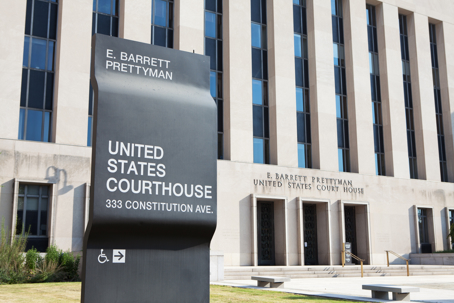
On May 29 the CFTC called Kalshi's Bitcoin perpetual a futures contract, approved it one day after Kalshi applied, and told every registered exchange it could list the same product. Chicago Mercantile Exchange Inc., a subsidiary of CME Group, sued in the District of Columbia on June 18. Its complaint says perpetuals are swaps under the Commodity Exchange Act and that the CFTC never explained why they are not.[1] We analyzed the complaint when it was filed. This article takes up the CFTC's response, and what that response does not address.
On September 2 the CFTC moved to dismiss. The motion spends one sentence on whether perpetuals are futures, asserting that they are, and thirty pages on why CME has no right to ask.[2] Its principal evidence is the testimony of CME Group's own chairman to investors. On the company's July earnings call, Terrence Duffy stated that perpetual futures do not appeal to CME's customers, that CME has heard no demand for them, and that CME could launch its own at any time.[3] Five weeks earlier, CME had told a federal court that the same product was causing it competitive harm. The CFTC has placed both statements before the same court.
Meanwhile, Kalshi's perpetuals have traded more than $44 billion in notional value since June, and if the motion succeeds, that market keeps growing on a classification no court has examined.[4]
The CFTC's Strategy: Standing Rather Than the Merits
CME did not ask for a preliminary injunction. It told the court it would move for summary judgment, and on August 27 Judge Colleen Kollar-Kotelly set a single combined schedule for that motion and for the CFTC's motion to dismiss.[5] A week after the CFTC filed, the Hyperliquid Policy Center, an advocacy group backed by the foundation behind the offshore perpetuals exchange Hyperliquid, sought leave to file an amicus brief supporting dismissal, authored by former Solicitor General Elizabeth Prelogar.[6]
The motion describes the suit as "much ado about nothing" and makes three arguments, none of which requires the court to construe the statute.[7]
The first is that CME has suffered no injury. To establish competitor standing in the D.C. Circuit, a plaintiff must show an actual or imminent increase in competition and make a "concrete showing" that its bottom line will suffer "as a matter of economic logic."[8] The CFTC contends that CME's complaint offers only formulaic recitations. It then relies on the statements of CME's chairman.
Perpetual futures "do not appeal to our core customers," he stated on the July 22 call; they "are in no way substitutes for the institutional hedging tools that these customers rely on"; and "we have not heard demand from our customers for these products." CME's own crypto futures volume, he added, has grown despite the existence of crypto perpetuals.[9]
The motion then cites CME's monthly volume reports. All four of CME's crypto futures contracts traded more in June, the month after the order, than in May, and all four remained above May levels in August. Micro Bitcoin, the retail-sized contract at the center of CME's theory, was up 44.7 percent in June.[10]
The second is that the playing field is level. The order authorized "Kalshi and other DCMs" to list crypto perpetuals, and CME is a DCM. If CME chooses not to list them, the CFTC argues, any harm is self-inflicted, and competitor standing requires an agency to have favored a rival rather than treated everyone alike.[11] Here the motion again quotes CME's chairman, who told investors that CME has "the full technical and operational capabilities to launch perpetual futures" and has contract specifications prepared. In the motion's words, "That should be the ball game."[12]
The third is that a favorable judgment would not help CME. CME does not contend that the CFTC lacked authority to approve perpetuals, only that they are swaps. If CME prevails, the CFTC argues, Kalshi and every other exchange could relist the same contracts as swaps under Rule 40.2 and keep trading them "almost instantly."[13]
The tax and margin differences between the two regimes, according to the motion, were never alleged to affect CME's competitive position. Predicting how traders would respond to those differences, the CFTC says, is speculation about third parties that Article III does not permit. Alternatively, exchanges could convert their perpetuals into "perpetual-style" futures that expire decades from now, a structure other exchanges already list and one CME's complaint expressly declines to challenge.[14]
The motion closes with a zone-of-interests argument built on Air Courier Conference v. American Postal Workers Union, contending that the CEA's self-certification system would be undermined if one exchange could litigate another's product labels.[15] It also quotes a 2011 comment letter in which CME itself told the CFTC that Dodd-Frank had "eliminated" "virtually all significant distinctions between futures and swaps."[16]
The Difficulties for CME
CME's competitive-injury theory is sound as a matter of doctrine. The earnings call is nonetheless a serious problem, and a familiar one for any public company that litigates against a competitor. Shareholders want to be reassured that a rival's product poses no threat; a court hearing a competitive-injury claim must be told the opposite. CME's chairman gave shareholders the reassuring version on July 22, five weeks after the complaint gave the court the other, and both are now before the same judge.
The volume figures compound the difficulty. Rising volume does not disprove diversion, since volume might have risen further without the competing product, but that argument is harder to make when the chief executive has said customers are not asking for the product. The 2011 letter will be cited widely as well, and CME will have to explain that it was then advocating harmonized regulation of economically equivalent products, not conceding that the statutory definitions are without meaning.
The most serious difficulty is the one the motion raises last. CME's complaint draws the line at expiration: a contract with a delivery date is a future, and a contract without one is a swap. Yet CME concedes that it does not challenge contracts that carry a delivery date in 2051 and a funding-rate mechanism. The CFTC describes those contracts as otherwise identical to Kalshi's product. If the only feature separating a lawful future from an unlawful swap is a date that no trader expects to matter, the distinction begins to look formal rather than substantive. That is a merits problem as much as a standing problem, and CME will need an answer to it.
Where the Motion Overreaches
The level-playing-field argument works only if listing perpetuals as futures is lawful, which is the very question CME disputes. A competitor is not required to engage in conduct it contends is unlawful in order to avoid competitive injury, and the only way CME could level this field is by adopting the classification it says violates the statute. Listing perpetuals as swaps on its own exchange would leave CME with five-day margin, swap dealer registration for its market makers, and none of the favorable tax treatment that Section 1256 of the Internal Revenue Code gives regulated futures. That is precisely the disadvantage its complaint describes. The motion assumes the answer to the merits question in order to argue that the court need not reach it.
The redressability argument encounters a more serious problem in the Supreme Court's 2025 decision in Diamond Alternative Energy v. EPA. The CFTC cites the case for the rule that redressability requires a "predictable chain of events."[17] The standard is stated correctly, but the case itself was decided for the plaintiffs.
Fuel producers had challenged the Environmental Protection Agency's approval of California's electric-vehicle rules, and the government argued that relief would not help them because automakers would continue building electric vehicles regardless. The Court rejected that argument on "commonsense economic principles" and declined to require affidavits about third-party behavior. A heightened proof-of-redressability requirement, it warned, would "create incentives for gamesmanship" and close the courthouse doors to traditional challenges to agency action.[18] The Court also reaffirmed that regulating one business can injure others in the chain, including "competitors."[19]
The CFTC's suggestion that Kalshi would simply relist its contracts as swaps has the same structure as the argument the Court rejected. The tax and margin differences the CFTC calls speculative, moreover, are not a side effect of CME's theory but the injury CME pleaded. The complaint says the CFTC authorized competition "on unlawful and unfair terms" by letting products Congress meant to regulate as swaps trade "on the favorable terms available only to futures."[20] Consider a retail trader choosing between a product taxed at the 60/40 blended rate on one-day margin and one taxed as ordinary income on five-day margin. Which one that trader picks is the sort of economic inference the D.C. Circuit's competitor-standing cases have accepted for decades.
The zone-of-interests argument is the weakest of the three. In the APA context the test is "not especially demanding," the Supreme Court has said, and "the benefit of any doubt goes to the plaintiff."[21] Air Courier involved postal workers with no stake in the mail statutes at issue; CME's stake in how derivatives on registered exchanges are classified is the subject of the very provisions it invokes.
The Merits Theory the Motion Does Not Test
The motion's background section sketches a merits theory that appears nowhere in the order itself. The CEA, the CFTC observes, contains no definition of a futures contract. Exchanges "have for decades pushed the frontier" of what counts as one, and the 2012 joint SEC-CFTC rule defining "swap" says that "if a DCM has a view that a particular product is a futures contract, it may self-certify the contract consistent with that view."[22] On this account, the label belongs in the first instance to the exchange.
The CFTC's own enforcement history points the other way. Binance described its perpetual contracts as "futures." The CFTC nonetheless sued it in 2023 on the theory that "Binance's perpetuals are swaps."[23] If the label were the operator's to choose, that complaint would have been drafted differently. The CFTC will respond that Binance was not a registered DCM. Whether a contract is a swap or a contract for future delivery, however, does not depend on who lists it.
The motion cites none of the CFTC's perpetuals enforcement actions, none of the circuit decisions defining a futures contract, and does not address the complaint's arbitrary-and-capricious count. We urged the CFTC to settle this question through formal rulemaking when it first asked for comment last year. The agency proceeded by policy statement instead, and that policy statement is now the subject of the litigation.
The August 27 Order
The CFTC's strategy depends on the court deciding standing first and never reaching the merits. On August 27, a week before the motion was filed, Judge Kollar-Kotelly had already complicated that approach. The CFTC had asked to be excused from filing the administrative record, as the local rules require, on the ground that its standing arguments would not depend on it. The court declined. A court deciding a Rule 12(b)(1) motion "may, and often must, consider documents outside the pleadings," she wrote, and the record "will likely contain further evidence of [CME's] competitive injury."[24]
The ruling has two effects. The administrative record comes in. Whatever the CFTC actually reviewed between Kalshi's application on May 28 and its approval on May 29 will be before the court, and that bears directly on the arbitrary-and-capricious claim the motion does not address. The court also declined to sequence standing ahead of the merits, ordering combined briefing and noting that standing "may equally be considered at the summary judgment stage."[25] The CFTC's approach depends on briefing standing without reaching the swap question. A week before the motion was filed, the court had already declined to structure the case that way.
A Representation That May Prove Consequential
To defeat redressability, the CFTC told the court that exchanges could relist perpetuals as swaps "almost instantly." That representation was made to defeat a standing argument, but it will carry weight in a different context. Having represented to a federal judge that reclassification is simple, the CFTC and the exchanges will find it difficult to argue, if the order is vacated, that unwinding the perpetuals market would be disruptive or that the market has grown too large to unwind.
What Comes Next
CME's response is due October 2. If the court dismisses on standing, the swap-versus-future question is never decided, and a market already in the tens of billions keeps growing on a classification no court has tested. That outcome would not vindicate the CFTC's reading of the statute. It would defer the question until a plaintiff with a clearer injury appears, and none has to date.
The CFTC and the SEC opened a joint request for comment on the swap definition the day CME sued, and that comment period closed August 24.[26] Until the agencies act or a court rules, anyone listing, clearing or trading perpetuals on a U.S. exchange should treat the futures classification as the CFTC's current position rather than settled law.
The same statutory definition is meanwhile being contested from the opposite direction in the sports event contract cases now headed to the Supreme Court, where the CFTC's position requires the term "swap" to reach as far as its position here requires that it not.
De Silva Law Offices, LLC advises exchange applicants, introducing brokers, fund sponsors and market participants on CFTC and NFA registration, derivatives classification, event contracts and prediction markets, and enforcement defense. Questions about this article or the firm's practice may be directed to info@desilvalawoffices.com.
De Silva Law Offices, LLC | 110 North Wacker Drive, Suite 2500, Chicago, IL 60606 | 312-500-8424 | desilvalawoffices.com
NB: This article is for informational purposes only and does not constitute legal advice. Reading this article does not create an attorney-client relationship.[1]Compl. ¶¶ 1–11, Chi. Mercantile Exch. Inc. v. Selig, No. 1:26-cv-02157 (D.D.C. June 18, 2026), ECF No. 1.
[2]Defs.' Statement of Points & Authorities in Supp. of Mot. to Dismiss at 1–2, Chi. Mercantile Exch. Inc. v. Selig, No. 1:26-cv-02157 (D.D.C. Sept. 2, 2026), ECF No. 30-1 [hereinafter Motion].
[3]Motion at 14–15, 18 (quoting CME Group Q2 2026 Earnings Introductory Script at 3–4 (July 22, 2026)).
[4]Kalshi launches 'perps' for gold and silver following CFTC approval, expanding futures offerings, CNBC (Sept. 10, 2026).
[5]Order at 3, Chi. Mercantile Exch. Inc. v. Selig, No. 1:26-cv-02157 (D.D.C. Aug. 27, 2026), ECF No. 29 [hereinafter Order].
[6]Proposed Brief of Amicus Curiae Hyperliquid Policy Center, Chi. Mercantile Exch. Inc. v. Selig, No. 1:26-cv-02157 (D.D.C. Sept. 9, 2026); see Hyperliquid Policy Center backs CFTC in fight over perpetual futures, asks court to drop CME's case, The Block (Sept. 9, 2026).
[7]Motion at 1.
[8]Air Excursions LLC v. Yellen, 66 F.4th 272, 279–80 (D.C. Cir. 2023); PSSI Glob. Servs., L.L.C. v. FCC, 983 F.3d 1, 11–12 (D.C. Cir. 2020).
[9]Motion at 14–17 (quoting CME Group Q2 2026 Earnings Introductory Script at 3–4).
[10]Motion at 15–16 (citing CME Group Exchange Volume Reports for June and August 2026).
[11]Motion at 17–18; Fulani v. Brady, 935 F.2d 1324, 1327 (D.C. Cir. 1991); Nat'l Fam. Plan. & Reprod. Health Ass'n v. Gonzales, 468 F.3d 826, 831 (D.C. Cir. 2006).
[12]Motion at 18.
[13]Motion at 19–20; Honeywell Int'l Inc. v. EPA, 374 F.3d 1363, 1369–70 (D.C. Cir. 2004) (per curiam).
[14]Motion at 21; Compl. ¶ 115 n.21; CFTC Letter No. 26-19 (June 12, 2026).
[15]Motion at 22–24; Air Courier Conf. v. Am. Postal Workers Union, 498 U.S. 517, 524–27 (1991).
[16]Motion at 5, 23–24 (quoting Letter from Craig S. Donohue, CME Group, to David Stawick, Sec'y, CFTC (July 22, 2011)).
[17]Diamond Alt. Energy, LLC v. EPA, 606 U.S. 100, 121 (2025); Motion at 21.
[18]Diamond Alt. Energy, 606 U.S. 100.
[19]Id. (quoting FDA v. All. for Hippocratic Med., 602 U.S. 367, 384 (2024)).
[20]Compl. ¶ 66.
[21]Lexmark Int'l, Inc. v. Static Control Components, Inc., 572 U.S. 118, 130 (2014) (quoting Match-E-Be-Nash-She-Wish Band of Pottawatomi Indians v. Patchak, 567 U.S. 209, 225 (2012)).
[22]Motion at 3–5; Further Definition of "Swap," "Security-Based Swap," and "Security-Based Swap Agreement"; Mixed Swaps; Security-Based Swap Agreement Recordkeeping, 77 Fed. Reg. 48,208, 48,303 (Aug. 13, 2012).
[23]Compl. ¶¶ 60, 62, CFTC v. Zhao, No. 23-cv-1887 (N.D. Ill. Mar. 27, 2023), ECF No. 1.
[24]Order at 2.
[25]Order at 3.
[26]Joint Request for Comment on Further Definition of "Swap" and "Security-Based Swap" and on Alternative Compliance, 91 Fed. Reg. 37,873 (June 24, 2026).