
CFTC Brings First Insider Trading Case Against a Corporate Employee on a Prediction Market
R Tamara de Silva | De Silva Law Offices, LLC | May 28, 2026
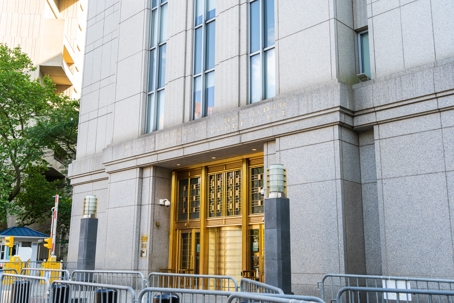
The federal government just told the world that prediction markets are real financial markets, and that the rules governing insider trading apply to them with full force. On May 27, 2026, the CFTC and the U.S. Attorney’s Office for the Southern District of New York simultaneously filed civil and criminal complaints against Michele Spagnuolo, a Google software engineer who allegedly used confidential company data to win $1.2 million betting on event contracts on Polymarket.
The Scheme
Spagnuolo, who traded under the handle “AlphaRaccoon,” had been a software engineer at Google since 2014. Every year, Google produces a “Year in Search” campaign, publicly revealing its top trending search terms in a coordinated marketing release designed to generate media coverage and advertiser interest. The underlying data is commercially sensitive, access-restricted, and labeled “Google Confidential” on the internal tools that house it.
In October 2025, Polymarket began listing event contracts tied to the outcome of Google’s 2025 Year in Search rankings. These were binary contracts resolving on whether specified individuals (Pope Leo XIV, Kendrick Lamar, d4vd, Donald Trump, and others) would appear in various positions on the final published list. The contracts functioned like any other prediction market wager: “Yes” shares paid $1.00 if the specified outcome occurred, “No” shares paid $1.00 if it did not.
According to the complaints, Spagnuolo accessed Google’s confidential Year in Search data through an internal software tool on October 15, 2025, at approximately 21:25 UTC. The tool showed Kendrick Lamar as the top trending person for 2025. The next day, he used his AlphaRaccoon account to wager on Lamar as the number one searched person on Google that year. He continued placing bets on related Year in Search contracts over the following weeks.
On November 27, 2025, Spagnuolo accessed the same tool again. By then, d4vd had replaced Lamar at the top of the list. Approximately three hours after accessing the data, Spagnuolo placed bets on d4vd ranking in the top five and taking the number one spot. The market at the time assigned a near-zero probability to d4vd being the most searched person on Google. Between October 15 and December 4, 2025, the AlphaRaccoon account placed approximately $2.75 million in wagers across roughly 25 Google Year in Search outcomes with near-perfect accuracy.
Google publicly released its Year in Search 2025 results on December 4, 2025. Shortly thereafter, Spagnuolo’s positions resolved and he profited approximately $1.2 million.
How He Got Caught
The community caught him before law enforcement did. After the Year in Search contracts resolved and AlphaRaccoon’s near-perfect record became visible, Discord and X users began discussing the account and publicly speculating that its operator was a Google insider. Spagnuolo responded by stripping the “AlphaRaccoon” handle from his Polymarket account, reverting it to a raw alphanumeric wallet address. The FBI would later cite this as evidence of consciousness of guilt, and it forms the basis of the money laundering count in the criminal complaint.
From there, the investigation followed three converging lines. The FBI traced cryptocurrency flows from the AlphaRaccoon Polymarket account back through its funding wallet (Wallet-0xAf6), through a cryptocurrency swapping service and a payment processor, to an account opened in Spagnuolo’s own name using his Italian government identification card. Google’s internal access logs provided the timestamps showing that Spagnuolo accessed the confidential Year in Search tool immediately before placing his trades. And the correlation between what the tool displayed at each access point and what Spagnuolo bet on sealed the connection.
For a staff information security engineer at Google, the operational security was remarkably poor. He funded his trading through wallets that led directly to an account bearing his real name and government ID.
The Legal Architecture
The CFTC’s complaint in CFTC v. Spagnuolo, No. 1:26-cv-04419 (S.D.N.Y.), charges violations of Section 6(c)(1) of the Commodity Exchange Act, 7 U.S.C. § 9(1), and Regulation 180.1(a)(1) and (3), 17 C.F.R. § 180.1(a)(1), (3). These are the CFTC’s anti-fraud and anti-manipulation provisions, modeled on SEC Rule 10b-5 and enacted under Dodd-Frank. (For a detailed treatment of how these provisions operate in practice, see our earlier analysis, When the Trade Comes Before the Tweet: The CFTC’s Insider Trading Investigation.) The theory of the case is misappropriation: Spagnuolo owed a duty of trust and confidentiality to Google, he breached that duty by using confidential information to trade for personal gain, and his trading constituted a manipulative or deceptive device in connection with swaps.
The complaint spends considerable space establishing that Polymarket event contracts are swaps under Section 1a(47)(A)(ii) of the Act, which covers any agreement, contract, or transaction providing for a payment or delivery dependent on the occurrence or nonoccurrence of an event or contingency associated with a potential financial, economic, or commercial consequence. The complaint also takes care to establish that Polymarket’s operations are anchored in New York, with its headquarters, Head of Markets, and key platform infrastructure personnel all based there. This is jurisdictional groundwork with implications that extend well beyond this single prosecution. (We have previously analyzed the CFTC’s jurisdictional strategy in the event contracts space, and the Spagnuolo complaint advances it further.)
The parallel criminal complaint charges commodities fraud under 7 U.S.C. §§ 9(1) and 13(a)(5), wire fraud under 18 U.S.C. § 1343, and money laundering under 18 U.S.C. § 1956 for Spagnuolo’s alleged efforts to obscure his proceeds through cryptocurrency swaps and privacy-oriented transfer services after the community identified him.
What This Means for Prediction Markets
This is the second insider trading enforcement action involving Polymarket in two months. In April, Master Sgt. Gannon Ken Van Dyke, a U.S. Army sergeant who helped plan the capture of deposed Venezuelan President Nicolás Maduro, was charged with using classified government information to make prediction market bets on the raid. He has pled not guilty.
The progression from Van Dyke to Spagnuolo is significant. Van Dyke involved classified military intelligence, a category of information with its own statutory protections and an obvious national security dimension. Spagnuolo involves confidential commercial information obtained through ordinary corporate employment. The CFTC is establishing that the misappropriation theory of insider trading in prediction markets operates the same way it does in securities markets: the source and character of the inside information do not matter. What matters is the breach of a duty of trust or confidence and the use of that information to trade.
Chairman Michael S. Selig’s statement leaves no ambiguity about the Commission’s posture: the CFTC will police insider trading on prediction markets regardless of the technology or platform used. Director of Enforcement David I. Miller described the Division as “a cop on the beat in policing the illegal use of inside information in the prediction markets and other markets within the CFTC’s jurisdiction.” This is language calculated to deter, and it signals that the enforcement infrastructure built around traditional derivatives markets is being extended, deliberately and publicly, to the prediction market space.
For anyone operating in event contracts, whether as a platform, a market maker, or a trader, this case should be understood as a clear marker. The legal framework exists. The CFTC is using it. And the combination of blockchain tracing, platform cooperation, and corporate access logs gives enforcement authorities a set of investigative tools that, frankly, make prediction market insider trading easier to detect and prove than its securities market equivalent. (For our full event contracts article series, including analyses of the CFTC’s enforcement advisory, the federal preemption doctrine, and the developing multi-jurisdictional litigation landscape, see the firm’s Event Contracts page.)
A Conspicuous Absence
It is worth noting what has not yet attracted enforcement attention. As of this writing, no insider trading charges have been brought in connection with trading in the crude oil futures markets, despite persistent questions and public speculation about the use of nonpublic information in that space. The CFTC announced an investigation into hundreds of millions of dollars in oil futures trades placed minutes before presidential announcements moved global markets. The CFTC has now demonstrated, twice in two months, that it has the legal tools and the institutional will to prosecute insider trading on prediction markets. Whether that same energy will be directed at the far larger and more consequential futures markets remains to be seen.
De Silva Law Offices, LLC, is a financial regulatory law firm in Chicago concentrating in CFTC/NFA compliance, derivatives regulation, event contracts and prediction markets, securities law, and enforcement defense.
De Silva Law Offices, LLC
110 North Wacker Drive, Suite 2500
Chicago, Illinois 60606
312-500-8424